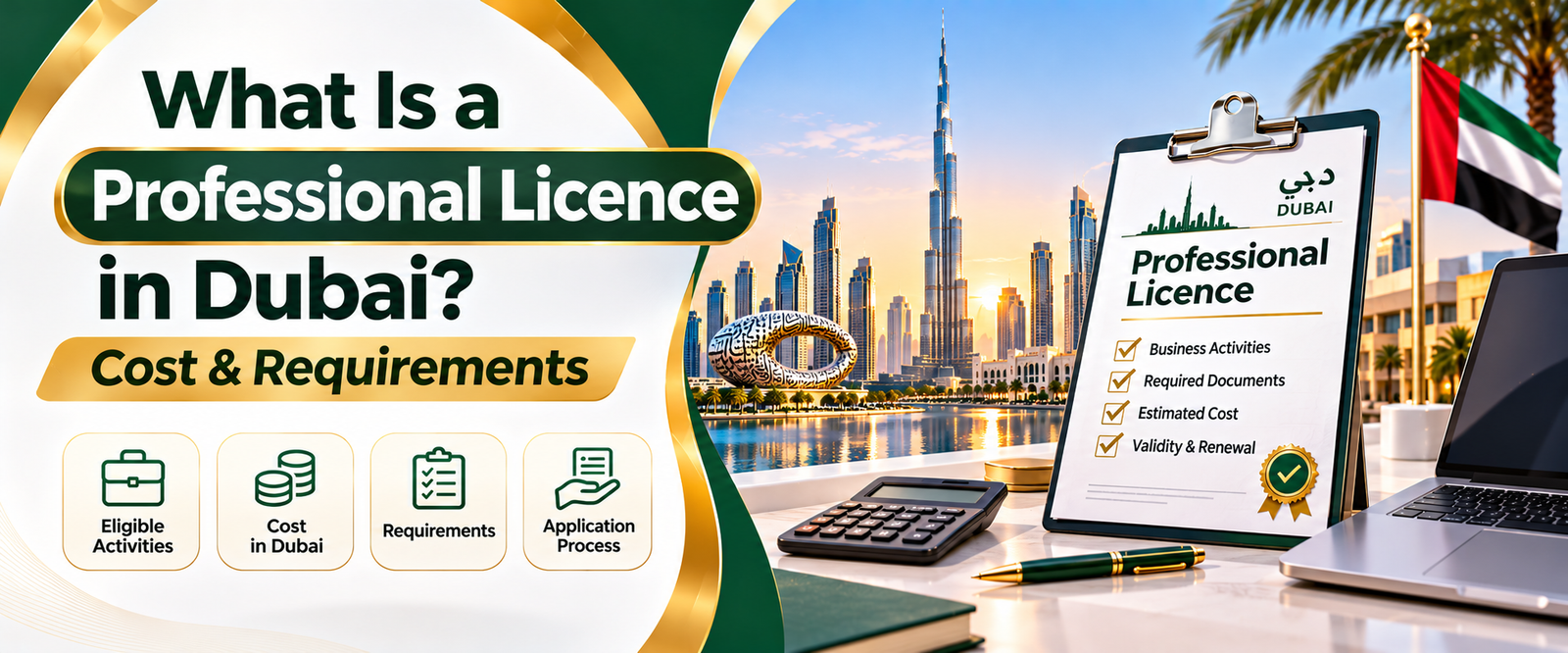
A professional license in Dubai allows eligible individuals and companies to provide approved professional services, including business consultancy, IT services, design, and certain technical activities. To obtain one, you must select an approved business activity, choose a legal structure, prepare the required documents, secure any applicable approvals, and complete registration with Dubai’s Department of Economy and Tourism (DET) or the relevant free-zone authority.
The process may be straightforward for an ordinary consultancy, but additional conditions can apply to regulated professions. Costs also vary because the license, office arrangements, immigration services, and government approvals are not always included in one package.
This guide explains what you need to know before applying, including a practical cost checklist, eligible activities, ownership rules, and the differences between mainland and free-zone licensing.
Professional License in Dubai: Quick Answer
| Question | What you need to know |
|---|---|
| What is it? | A business license for approved professional and service-based activities. |
| Who needs it? | Eligible consultants, designers, IT service providers, business advisers, and other professional businesses. |
| How much does it cost? | There is no single fixed price. Costs depend on the authority, activity, office, visa requirements, and approvals. |
| What documents are required? | Typically, applicant identification, business activity details, trade name information, and documents required by the chosen legal structure. |
| How do I apply? | Select the activity and structure, reserve a trade name, obtain approvals, arrange required premises, and complete payment and licensing. |
| Can foreigners own the business? | Many eligible businesses permit 100% foreign ownership, subject to activity-specific conditions. |
| Where can I apply? | Dubai DET for mainland businesses or the relevant free-zone authority. |
| How long does it take? | Processing varies according to the application route, documents, and any external approvals. |
Before applying: Confirm the exact activity code and permitted legal structure. These two decisions influence your required documents, ownership arrangements, licensing costs, and the services your business can legally provide.
What Is a Professional License in Dubai?
A professional license is a business authorization for approved activities involving professional knowledge, skills, consultancy, or specialized services.
For example, a business consultant may provide management advice, while a software company may develop applications for clients. Both deliver services, but they may need different activity classifications.
Dubai distinguishes professional activities from commercial and industrial activities. The appropriate license depends on what the business actually does, not simply how it describes itself.
A company that provides marketing consultancy, for example, should not assume its authorization also covers importing products or providing regulated investment advice.
The UAE Government’s business setup guidance explains how economic activities, legal forms, approvals, and business premises affect the licensing process.
Who Needs a Professional License in Dubai?
This licensing category is relevant to individuals and companies intending to provide eligible professional services.
Typical applicants include independent consultants, foreign investors setting up service companies, partners establishing professional practices, and businesses providing technical or creative services.
Consider three examples.
A management consultant who advises companies on internal operations may need an approved management consultancy activity.
A web development company may require activities covering website development, software services, or related technology work.
A professional engineering practice may need an appropriate business license together with professional qualifications and approvals from the relevant authorities.
The third example shows why professional licensing is not identical for every business.
It is also important to distinguish an establishment’s business license from an individual’s professional registration. Certain healthcare, legal, engineering, and financial activities may require separate professional authorization.
Which Activities Are Allowed Under a Professional License in Dubai?
There are many professional and service-based activities available in Dubai, but the correct activity must be selected from the licensing authority’s approved list.
A broad description such as “consultancy services” is not enough to determine every service you may legally offer.
You should identify your proposed work as precisely as possible. Consider what you will advertise, what your client contracts will cover, and what services will appear on your invoices.
Consultancy and Business Advisory Services
Professional consultancy businesses may provide services related to management, business strategy, operations, marketing, or human resources, depending on the approved activity.
For example, a management consultant advising a retailer on internal reporting and business processes is performing a different function from someone giving regulated investment recommendations.
Although both may describe their work as consultancy, the licensing requirements are not necessarily the same.
Before selecting an activity, write down the actual services you intend to sell and compare them with the official activity descriptions.

IT, Digital and Creative Services
Dubai has licensing options for many technology, digital, and creative businesses.
Depending on the authority and activity classification, these may include:
- Software development and IT consultancy.
- Website design and development.
- Graphic design and creative services.
- Marketing and advertising consultancy.
- Certain data-related services.
- Technical support and other approved digital services.
These categories can overlap, but they are not interchangeable.
A business developing websites for customers should not assume its license also covers telecommunications operations, regulated financial technology, or every type of data-processing activity.
If you intend to provide several services, check whether the activities can be combined under the proposed license and whether additional fees or approvals apply.
Accounting, Engineering and Other Regulated Professional Services
Some professional services require closer regulatory review because they involve legally protected or regulated work.
Accounting provides a useful example. General bookkeeping and statutory auditing are not necessarily the same licensed activity. A business intending to sign audit reports must confirm the relevant professional and regulatory requirements rather than relying on a general accounting activity.
Engineering consultancy may involve professional qualifications, technical registrations, and approvals appropriate to the work performed.
Recruitment and employment-related services may fall under Ministry of Human Resources and Emiratisation requirements, depending on the business model.
Certain financial and legal services may also require specialist authorization.
| Activity category | Example of proposed work | Important licensing check |
|---|---|---|
| Management consultancy | Advising businesses on processes and operations | Confirm the approved consultancy activity |
| IT services | Software development or IT advisory | Check the exact technology activity |
| Creative services | Graphic design, branding, and website design | Confirm permitted creative services |
| Accounting | Bookkeeping or accounting support | Distinguish ordinary accounting from regulated auditing |
| Engineering | Engineering design or technical advice | Check qualifications and professional approvals |
| Recruitment | Employee placement or recruitment services | Verify the applicable employment-service approvals |
| Financial advisory | Investment or financial advice | Determine whether financial regulatory authorization is required |
The table provides examples, not a complete government-approved activity list.
For accurate classification, check the relevant activity records through Invest in Dubai or your preferred free-zone authority.
What Are the Requirements for a Professional License in Dubai?
Professional license requirements in Dubai vary according to the applicant, business activity, legal structure, and licensing jurisdiction.
A foreign entrepreneur opening a general consulting company will not necessarily submit the same documents as a partnership establishing a regulated professional practice.
The best approach is to divide the requirements into identification and business information, legal-structure documents, and activity-specific approvals.
Eligibility for Foreign Investors and Residents
Foreign investors can establish many professional and service businesses in Dubai.
An applicant must provide accurate identification and ownership information and select an activity that the relevant authority permits.
You do not necessarily need to hold a UAE residence visa before beginning the company formation process. However, non-resident applications may involve different identification, authentication, or processing requirements.
Company incorporation and immigration permission are separate matters.
A non-resident who successfully establishes a licensed company does not automatically receive residence status.
Foreign applicants should also check whether the chosen legal form is available for their nationality and activity.
Our guide to opening a business in Dubai as a foreign investor provides more background on ownership and company formation.
Educational Qualifications and Professional Approvals
There is no universal degree requirement that applies to every professional licensing activity.
The qualification requirement depends on the actual profession and the responsible regulator.
A general business advisory activity may have different entry conditions from engineering consultancy, auditing, or another regulated profession.
Where applicable, an authority may request a degree certificate, professional registration, evidence of experience, or approval from a specialist government department.
Applicants should verify these conditions before arranging certificate attestation or paying professional registration fees.
Documents Required for a Professional License in Dubai
The following checklist separates common application information from documents that depend on the business structure or regulated activity.
| Requirement | Typical purpose | Applicability |
|---|---|---|
| Passport details or copies | Identify applicants and shareholders | Commonly requested |
| Emirates ID details | Identify UAE-resident applicants | Where applicable |
| Selected economic activity | Determine license eligibility | Essential |
| Proposed trade name | Name reservation and approval | Generally part of registration |
| Shareholder and manager details | Establish ownership and management | According to legal structure |
| Initial approval | Complete the preliminary registration stage | Where applicable |
| Memorandum of Association | Record company formation arrangements | Certain legal forms |
| LSA agreement | Fulfil applicable sole-establishment requirements | Only where required |
| Lease, Ejari, or approved workspace documents | Establish the business location | According to jurisdiction and activity |
| Educational or professional certificates | Confirm professional eligibility | Regulated activities |
| External authority approval | Authorize a regulated activity | Where required |
| Corporate shareholder documents | Identify an existing company acting as shareholder | Corporate ownership structures |
Documents issued abroad may require attestation or translation.
A mainland company may need suitable commercial premises and the required tenancy documentation. A free-zone company may be eligible for an approved shared-office or flexi-desk arrangement, depending on its activities and authority.
Practical check: Before preparing the application, ask the licensing authority for the document list for your exact activity code and legal form. This helps avoid paying for documents that are not required.
How Much Does a Professional License Cost in Dubai?

The cost of a professional license in Dubai depends on what you are establishing, where you register it, and what is included in the quotation.
There is no single government-set total covering every professional company.
A consultant using an eligible free-zone workspace package may have a different cost structure from a mainland consultancy that requires dedicated premises. A regulated professional practice may also face additional approval expenses.
The most useful way to compare prices is to examine the complete first-year cost and the charges that recur in subsequent years.
Mainland Professional License Costs
Mainland professional licensing generally involves DET procedures, with fees influenced by the selected activity and application details.
A budget may include trade name reservation, initial approval, license issuance, legal documentation, appropriate premises, and any external regulatory permissions.
Visa and immigration expenses are separate considerations if the company intends to sponsor an investor or employees.
Some costs may be payable during initial registration, while others depend on the business location or the number of people requiring visas.
A licence quotation should be based on the exact activity and legal structure. Avoid assuming that an advertised general mainland setup range represents the official cost of every professional licence.
Free Zone Professional License Costs
Free-zone authorities offer different company formation packages, and some may combine licensing with an approved workspace arrangement.
A quoted package could cover incorporation and the licence while excluding visa processing, immigration establishment charges, external regulator approvals, or other services.
The cheapest advertised package may also have limits on visa eligibility, permitted activities, or workspace access.
Before choosing a package, confirm what is actually included and whether the proposed activity is available.
Additional Fees, Visa Costs and Renewal Expenses
A useful cost comparison should separate one-time, annual, conditional, and optional charges.
| Expense | Usually considered when | Important question |
|---|---|---|
| Company registration | Initial formation | Is it included in the advertised package? |
| Licence issuance | Initial setup and renewal | What activities are included? |
| Trade name and preliminary approvals | Registration | Are separate authority charges applicable? |
| Legal documentation | Certain structures | Is notarization or attestation needed? |
| Office or workspace | Initial setup and ongoing operation | Is it included, leased separately, or renewed annually? |
| External approvals | Regulated activities | Is a specialist authority fee required? |
| Immigration establishment services | Visa sponsorship arrangements | Is an establishment file included? |
| Residence visas | Investor or employee immigration | Are medical, identity, and other processing charges included? |
| Licence renewal | Subsequent years | What is the full annual recurring cost? |
| Business activity amendments | When operations change | Does adding an activity require a fee or separate approval? |
How to compare two licensing quotations
Imagine two offers for an IT consultancy.
The first is a lower-priced package that includes only company registration and an eligible workspace arrangement.
The second costs more but includes immigration establishment services and an investor visa application.
It would be misleading to compare only their advertised starting prices.
Instead, ask both providers for an itemized quotation covering the same activities, shareholders, visa requirements, office arrangements, and renewal period.
Use this comparison:
Comparable first-year budget = licence and registration + required premises + applicable approvals + required immigration services + any other mandatory setup charges.
Then calculate the ongoing annual expenses separately.
Do not include optional consultancy or document-handling services in mandatory government fees.
For broader budgeting context, see our article on the cost of starting a business in Dubai.
The exact amount should be confirmed through a current authority-specific quotation. A generic price range cannot reliably describe every professional licence.
Entrepreneurs who need help comparing licensing options can also consult a private business setup firm. For example, Incorpyfy offers Dubai company formation and licensing assistance, including guidance on mainland and free-zone structures, documentation, and cost estimates. Any quotation from a consultancy should be compared with the applicable government fees, required approvals, and renewal expenses before making a decision.
How to Get a Professional License in Dubai: Step-by-Step Process
The process begins with selecting the correct activity and licensing route.
For mainland companies, the main authority is Dubai’s Department of Economy and Tourism. Free-zone companies follow the procedures of their respective authorities.
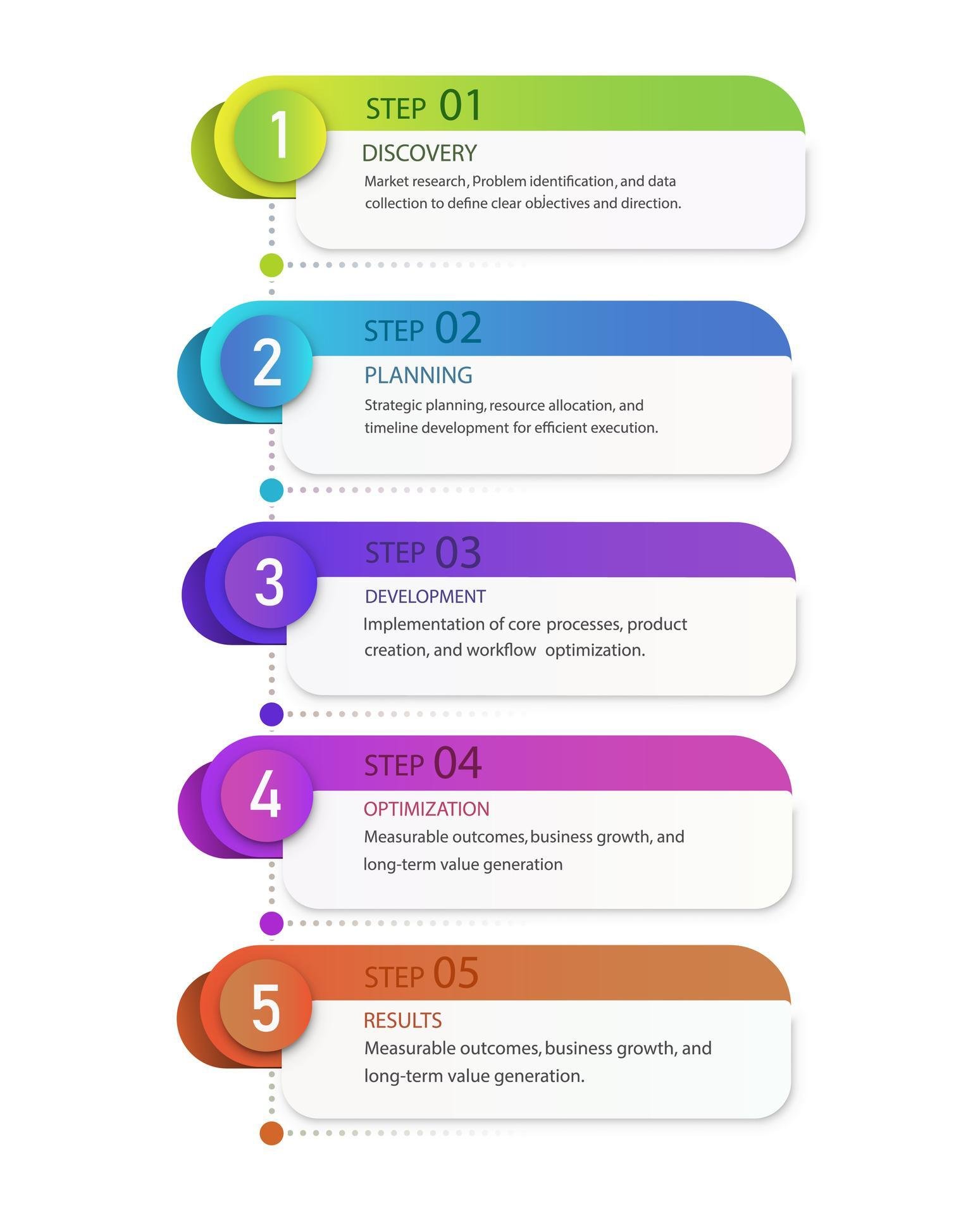
The following five stages summarize the process. Actual portal steps and documents may differ between jurisdictions.
Step 1: Choose Your Business Activity and Legal Structure
Describe what the company will do in practical terms.
For example, “providing IT support to companies” is more useful for activity selection than the broad statement “technology business.”
Check the authority’s approved activity description and confirm whether it permits the services you plan to advertise and invoice for.
Next, identify which legal forms are available for that activity.
Check the ownership conditions, possible LSA requirements, and premises rules before moving to registration.
Checkpoint: You should know the proposed activity, licensing jurisdiction, legal structure, and any special approvals before making major financial commitments.
Step 2: Reserve Your Trade Name and Obtain Initial Approval
Choose a proposed business name that meets the authority’s naming requirements.
Submit it for availability and approval through the applicable registration process.
For mainland licensing, initial approval is generally one of the important preliminary stages.
Initial approval indicates that the application may proceed to subsequent requirements. It is not a substitute for the final issued business licence.
Checkpoint: Confirm that the business name and selected activities appear correctly in the application.
Step 3: Prepare Documents and Arrange Your Business Premises
Prepare the identification, ownership, and incorporation documents required by your selected legal form.
Where applicable, this may include a Memorandum of Association, relevant attestations, and premises documents.
For a mainland business, check the approved location requirements and whether an Ejari-registered lease is necessary.
For a free-zone business, verify whether the selected workspace package satisfies the authority’s rules for your activity.
Checkpoint: Do not sign a long-term lease or purchase an office package until the licensing requirements have been confirmed.
Step 4: Obtain Any Required External Approvals
Certain professional activities require permission from another government body or professional regulator.
This stage is especially important for regulated practices such as certain recruitment, engineering, legal, financial, or other specialized services.
The responsible authority and required documents depend on the activity.
An ordinary consultancy should not automatically be treated as having the same external approval requirements as a regulated professional practice.
Checkpoint: Confirm that all specialist approvals are complete before assuming that licence issuance can proceed.
Step 5: Pay the Fees and Receive Your License
After the authority accepts the required information, documents, and approvals, it will provide payment instructions.
Once the application is completed successfully, the company receives its business licence.
Review the issued document before beginning operations.
Check the legal name, approved activities, legal form, licence validity, and other recorded details.
Your company should operate within its approved business activities. Adding a materially different service may require an activity amendment or additional authorization.
For official procedures, consult the UAE Government’s mainland setup steps.
Processing time varies by application. A fast licensing service does not guarantee equally fast immigration, premises, regulatory approval, or banking processes.
Which Business Structures Can Hold a Professional License in Dubai?
The legal form affects the ownership arrangement, liability, incorporation documents, and conditions that apply to the business.
Not every legal structure is available for every professional activity.
Choosing the wrong form can create unnecessary complications, even if the business activity itself is eligible.
Sole Establishment, Civil Company and LLC
A sole establishment is associated with one owner and has a different liability framework from an incorporated limited liability company.
A civil company may be available for certain professional activities involving multiple professionals, depending on the applicable legal conditions.
An LLC has a separate company structure with shareholder and liability arrangements governed by the relevant laws.
| Structure | Practical consideration | What to verify |
|---|---|---|
| Sole establishment | One-owner business arrangement | Personal liability and any applicable LSA condition |
| Civil company | Professional business arrangement involving eligible participants | Permitted activities, ownership and liability rules |
| LLC | Incorporated company with limited-liability characteristics | Activity eligibility, shareholders and formation documents |
There is no reason to choose a structure solely because another consultant or professional uses it.
Your decision should reflect the intended activity, number of owners, exposure to business liabilities, and future operating needs.
Can Foreigners Own 100% of a Professional Business?
Many eligible Dubai mainland businesses can be fully foreign-owned.
UAE legislative reforms expanded foreign ownership opportunities and removed the former general requirement for majority Emirati ownership across many activities.
However, this does not mean every activity is available without conditions.
Some sectors remain regulated or subject to additional requirements.
A full foreign ownership arrangement also should not be confused with an exemption from professional registration, activity approval, or other legal obligations.
Review the UAE Government’s company formation guidance and the relevant DET activity conditions before choosing the legal structure.
When Is a Local Service Agent Required?
A Local Service Agent, or LSA, is not the same as an equity shareholder.
Where an LSA arrangement applies, it does not automatically give the agent an ownership percentage in the company.
The requirement depends on the business activity and the chosen legal form.
An official Invest in Dubai record offers a useful example.
The professional activity Information Provision Services, code 8299006, lists several available legal structures. Its official record states that the sole-establishment legal form is available to foreign investors provided that a UAE Local Service Agent is appointed.
The same record also lists other legal forms, demonstrating why applicants should not apply one sole-establishment condition to every type of professional company.
You can see the Invest in Dubai activity record for Information Provision Services.
This example does not mean that every professional business needs an LSA.
The correct question is: Does my specific activity, under my selected legal structure, require a Local Service Agent?
Verify that point directly before relying on a general claim that sponsors or service agents are either always required or never required.
Mainland vs Free Zone Professional License in Dubai
A mainland and a free-zone licence may both be suitable for a service business, but they operate under different licensing frameworks.
The decision should depend on the actual business model, not only the advertised setup price.
When a Mainland Professional Licence May Be Suitable
A mainland licence may suit a business that intends to carry out approved professional activities under Dubai’s mainland licensing framework.
It may be suitable where the planned operations, premises, professional requirements, or customer arrangements call for mainland licensing.
However, a mainland licence does not authorize every service automatically.
Sector-specific approvals and activity restrictions continue to apply.
Mainland businesses must also satisfy the applicable premises, legal documentation, and licensing conditions.
When a Free Zone Professional License May Be Suitable
A free-zone setup may suit certain consultancy, technology, creative, or internationally oriented service businesses.
Some free zones offer approved workspace arrangements and packages that can be convenient for smaller teams.
However, the list of available activities, visa facilities, office options, and operating permissions differs between authorities.
A business should check its intended activities and market-access requirements before selecting a free zone.
Can a Free Zone Company Operate in Mainland Dubai?
A Dubai free-zone licence does not automatically authorize unrestricted operations throughout mainland Dubai.
Dubai Executive Council Resolution No. 11 of 2025 introduced a framework through which eligible establishments licensed in Dubai free zones may obtain specific DET authorizations for activities outside their free zones within the emirate.
The resolution identifies three routes:
| Authorization route | What it generally covers |
|---|---|
| Licence for a branch within Dubai | Establishing a branch in the emirate outside the free zone, subject to approval |
| Licence for a branch operating out of the free zone | Conducting authorized mainland activities through an approved branch operating from the free zone |
| Temporary permit | Conducting specified activities in mainland Dubai for an approved temporary period |
The temporary permit has a maximum validity of six months under the resolution.
The law specifies AED 10,000 per year for the branch licence operating out of the free zone and AED 5,000 for the relevant temporary permit. These are fees for those particular authorizations, not ordinary professional licence prices or fees for every branch arrangement.
Eligibility remains subject to DET rules, the free-zone authority’s approval, the relevant activity list, and any required sector approvals.
The resolution also requires separate financial records for activities conducted outside the free zone within Dubai.
Review the official Executive Council Resolution No. 11 of 2025.
This framework should not be interpreted as a universal right for every free-zone company to operate anywhere in the UAE.
Mainland vs Free Zone Comparison
| Factor | Mainland professional licence | Free-zone professional licence |
|---|---|---|
| Licensing authority | Dubai DET | Relevant free-zone authority |
| Approved activities | DET activity classifications | Authority-specific activity classifications |
| Ownership | Full foreign ownership available for many eligible structures | Foreign ownership arrangements under applicable free-zone rules |
| Workspace | Mainland premises requirements | Approved free-zone workspace arrangements |
| Operating permissions | Activities permitted under the mainland licence | Mainland activities may require additional authorization |
| External approvals | Required where the activity is regulated | May also apply depending on the activity |
| Visa arrangements | Subject to applicable immigration and employment conditions | Depends on authority, package, and immigration requirements |
| Costs | Activity, legal form, premises, and approval dependent | Authority, package, workspace, and visa dependent |
For a broader decision guide, see mainland vs free zone company setup in Dubai.
The better option is the one that legally supports your planned operations at a cost you can sustain.
Professional License vs Commercial License in Dubai
A professional licence generally authorizes approved professional or service activities. A commercial licence generally covers approved trading and commercial activities.
The distinction matters because a company must be licensed for what it actually does.
| Factor | Professional licence | Commercial licence |
|---|---|---|
| Main business activity | Providing approved professional services | Trading or other approved commercial activities |
| Typical example | Management consultancy | Product distribution or general trading |
| Main value delivered | Expertise or professional service | Goods or approved commercial transactions |
| Possible specialist approvals | Professional or technical regulator | Product, trading, or sector regulator |
| Legal forms | Depends on activity and authority | Depends on activity and authority |
| Additional activities | Subject to approval | Subject to approval |
Consider a business that advises retailers on stock management. Its service may fall under an appropriate consultancy activity.
If the same business starts importing goods for resale, its existing consultancy authorization should not be assumed to cover that new operation.
The proposed trading activity must be checked separately.
For businesses primarily involved in buying and selling goods, see our guide to obtaining a general trading license in Dubai.
Benefits of a Professional License in Dubai
A suitable professional licence allows a business to operate within a recognized licensing framework for its approved services.
For an eligible entrepreneur, the practical advantages may include the ability to establish a properly licensed consultancy or service company, enter business contracts, invoice for permitted work, and choose from available legal structures and licensing jurisdictions.
Many eligible activities also provide foreign investors with full ownership opportunities.
Some businesses may be able to expand their approved services by obtaining activity amendments or further approvals.
However, these benefits have limits.
A professional licence does not guarantee a residence visa, unrestricted mainland activity, automatic banking approval, tax exemption, or the right to perform regulated services without specialist authorization.
Its value depends on whether the approved activities and business structure genuinely fit your intended operations.
What Happens After Obtaining a Professional License?
Licence issuance allows an eligible business to begin its approved activities, but other obligations may still need attention.
The main areas are immigration and staffing, banking, taxation, recordkeeping, and licence renewal.
Residence Visas and Business Banking
Establishing a business and obtaining UAE residence status are separate processes.
An investor who wishes to reside in the UAE must follow the applicable immigration procedure and meet the requirements of the chosen residence category.
Similarly, employing staff may involve work permits, immigration documentation, and compliance with the relevant employment rules.
A business bank account also requires a separate bank application.
Banks may assess the company’s ownership, approved activities, expected transactions, business premises, and source of funds before deciding whether to open an account.
A trade licence is an important document, but does not guarantee bank approval.
For practical guidance, read how to open a business bank account in Dubai.
Corporate Tax and VAT Obligations
Professional businesses must consider their applicable UAE tax obligations, which depend on legal status, income, turnover, and other conditions.
For businesses subject to the ordinary UAE Corporate Tax rates, taxable income up to AED 375,000 is generally subject to a 0% rate. In comparison, taxable income above that threshold is generally subject to 9%.
Qualifying Free Zone Persons are subject to a different framework. Their Qualifying Income may benefit from a 0% Corporate Tax rate, while taxable income that does not qualify may be subject to 9%, without the ordinary AED 375,000 zero-rate band.
These benefits depend on meeting the conditions of the applicable free-zone tax regime.
Natural persons conducting business are treated differently. Under the Federal Tax Authority’s rules, a natural person comes within the scope of Corporate Tax where turnover from their UAE business or business activities exceeds AED 1 million during a calendar year, subject to the relevant exclusions and requirements.
This is a turnover threshold, not the ordinary AED 375,000 taxable-income rate band.
See the FTA’s Corporate Tax guidance for natural persons and FTA information on free-zone taxation.
VAT registration is assessed separately.
For UAE-resident businesses subject to the standard VAT registration rules:
- Mandatory registration generally applies when taxable supplies and imports exceed AED 375,000 in the preceding 12 months or are expected to exceed the threshold within the next 30 days.
- Voluntary registration may be available when the relevant taxable supplies, imports, or qualifying expenses exceed AED 187,500 under the applicable tests.
Different registration rules may apply to non-resident businesses.
The Federal Tax Authority’s VAT registration guidance provides the official conditions.
For broader guidance, read our article about UAE Corporate Tax for small businesses.
Professional License Renewal and Compliance
Professional businesses should keep track of licence validity, premises documentation, professional approvals, and any applicable registration or reporting obligations.
Renewal requirements depend on the issuing authority and activity.
A useful annual compliance review includes checking that the licence still covers the services being provided, ownership details remain accurate, premises requirements are satisfied, and any professional registrations remain valid.
Business owners should also maintain appropriate financial records and monitor corporate tax, VAT, and immigration requirements.
If the company wishes to add new services, it should confirm whether an activity amendment or additional approval is required before offering them.
Read our Dubai trade license renewal guide for related renewal considerations.
Frequently Asked Questions About Professional Licenses in Dubai
Can I Get a Professional License in Dubai Without UAE Residency?
Certain business formation routes are available to non-resident foreign investors. However, the available steps, identity verification, and documentation depend on the authority. Forming a company does not automatically grant residency, and a residence visa application may involve further requirements.
Do I Need a Degree to Obtain a Professional License?
A degree is not a universal requirement. Regulated professions may require relevant qualifications, professional registrations, or approvals. If your proposed activity has educational requirements, confirm them with the responsible authority before paying for certificate attestation.
How Long Does It Take to Obtain a Professional License in Dubai?
There is no single processing time for every applicant. The timeline depends on the application route, completeness of documents, activity approvals, and other requirements. Ask for a timeline covering the entire setup, not only the licence issuance stage.
Can I Add Multiple Activities to One Professional License?
Possibly. The authority must permit the proposed combination of activities, and additional conditions or fees may apply. It is useful to identify all planned services at the beginning so you can check their compatibility before registration.
Can I Get a Professional License Without Renting a Physical Office?
Some free zones allow businesses to use approved shared-workspace or flexi-desk arrangements. This does not mean every professional licence can be obtained without suitable premises. The rules depend on jurisdiction and activity, and mainland premises requirements may differ.
Can a Professional License Holder Hire Employees in Dubai?
A properly licensed business may be able to hire employees after meeting the applicable immigration, work-permit, establishment, and premises requirements. Employee eligibility and visa capacity are not determined by the professional licence alone.
Conclusion
Obtaining a professional license in Dubai begins with selecting the correct business activity and understanding the conditions attached to it.
Before submitting an application, confirm the permitted legal structure, documentation, professional approvals, and full cost of establishing and maintaining the business.
Compare mainland and free-zone options according to where and how you intend to operate, not simply the advertised licence price.
The most useful next step is to prepare a clear description of your proposed services and ask the relevant licensing authority to confirm the exact activity, permitted legal forms, required approvals, and itemized charges.
You can begin with the official Invest in Dubai platform or the free-zone authority responsible for your intended setup.
A well-informed licensing decision can help you avoid unnecessary expenses, incorrect activity selection, and restrictions that only become apparent after registration.