
Sustainable development requires balancing economic growth, environmental responsibility, and social wellbeing. Modern societies depend on reliable infrastructure, clean resources, efficient transportation systems, and healthy environments to support long-term prosperity. As populations grow and economies become increasingly interconnected, the importance of sustainability and infrastructure continues to expand.
Environmental quality directly influences public health, productivity, community wellbeing, and future development opportunities. At the same time, infrastructure forms the foundation upon which economic activity, trade, communication, transportation, and public services operate. Together, these elements shape the overall quality of life experienced by individuals, businesses, and communities.
Long-term progress depends on creating systems that can support current needs while preserving resources and opportunities for future generations. Sustainable development therefore focuses not only on growth, but also on resilience, efficiency, environmental stewardship, and responsible resource management.
Sustainability and infrastructure are among the most important pillars of national development. Strong infrastructure enables economic activity, facilitates movement of goods and people, supports access to services, and creates opportunities for innovation and investment. Efficient transportation networks, reliable utilities, digital connectivity, and modern public facilities contribute directly to productivity and competitiveness.
Environmental sustainability is equally important for maintaining quality of life. Clean air, safe water resources, effective waste management, and responsible land use help protect public health while preserving natural resources for future generations. Sustainable environmental policies ensure that economic growth does not come at the expense of long-term ecological stability.
As urban populations continue to grow, governments and institutions increasingly focus on creating communities that balance development with environmental responsibility. Sustainable cities seek to improve mobility, reduce resource consumption, increase energy efficiency, and provide healthier living environments for residents. These efforts contribute to stronger communities and more resilient economies.
National competitiveness is also closely linked to infrastructure and sustainability performance. Countries that invest in modern infrastructure, environmental innovation, digital services, and resource efficiency are often better positioned to attract investment, support business growth, and adapt to future challenges.
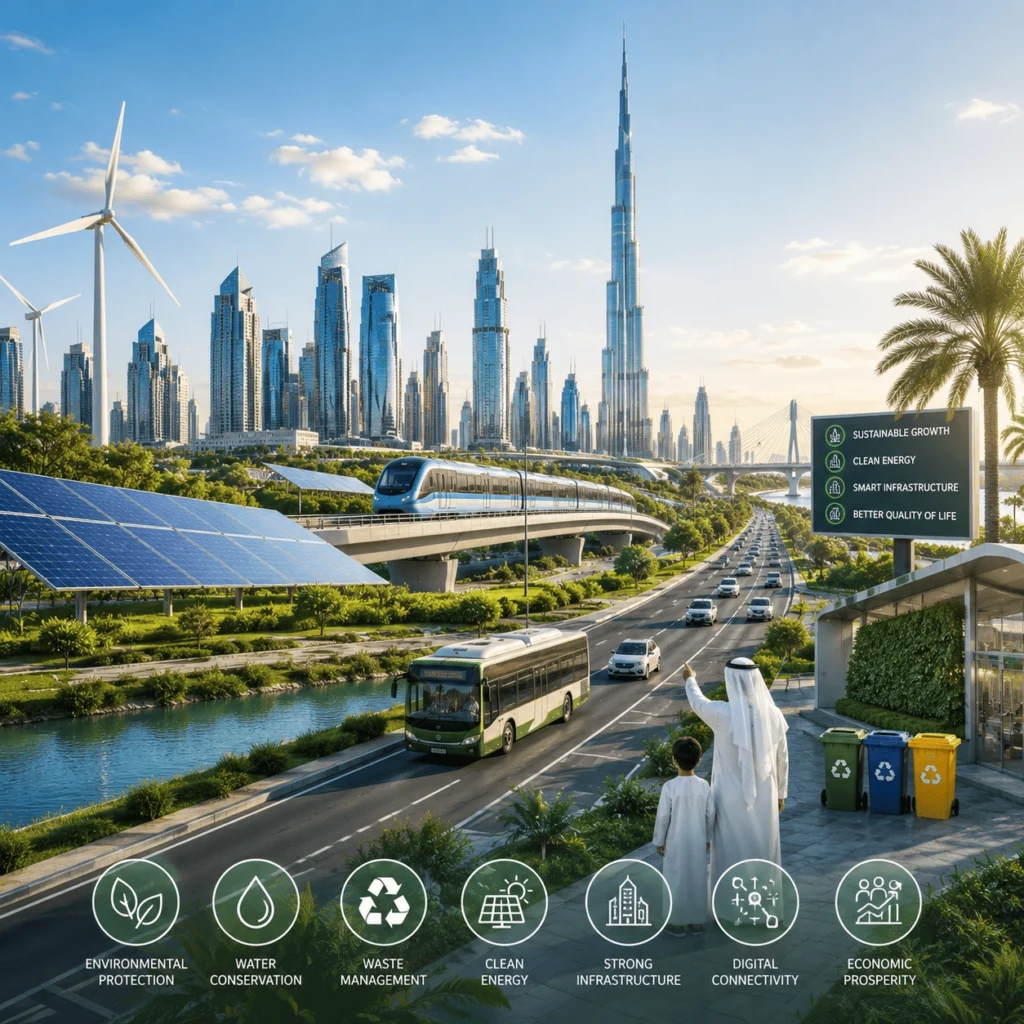
Protecting natural resources, improving air quality, preserving ecosystems, and reducing environmental impact help ensure long-term sustainability and healthier communities.
Efficient use of water, energy, land, and materials supports economic productivity while reducing waste and preserving resources for future generations.
Reliable transportation systems, utilities, telecommunications networks, and public facilities strengthen connectivity, accessibility, and economic performance.
Technology-driven planning, digital services, innovation, and data-informed decision-making improve efficiency while supporting sustainable urban and economic growth.
Environmental and infrastructure performance is evaluated through a variety of indicators that help measure sustainability, efficiency, accessibility, and quality. These indicators provide valuable insights into how effectively systems support economic development, environmental stewardship, and public wellbeing.
Air quality is one of the most important indicators of environmental health. Clean air contributes to better public health outcomes, reduces respiratory illnesses, improves quality of life, and supports healthier communities. Monitoring air quality helps identify environmental challenges and guides efforts to reduce pollution and emissions.
Water is a critical resource for both environmental sustainability and economic development. Water sustainability indicators help assess conservation efforts, resource management practices, infrastructure efficiency, and long-term resource availability. Effective water management supports resilience in both urban and natural environments.
Waste generation and treatment play a major role in environmental performance. Recycling programs, waste reduction initiatives, resource recovery systems, and sustainable disposal methods help minimize environmental impact while promoting more efficient resource use. Effective waste management contributes to cleaner communities and supports circular economy objectives.
The transition toward cleaner energy sources is becoming increasingly important for long-term sustainability. Clean energy indicators help measure renewable energy adoption, energy diversification, environmental impact reduction, and progress toward lower-carbon economic development.
Transportation systems support economic activity, mobility, trade, tourism, and accessibility. Indicators related to roads, ports, airports, rail systems, and public transportation help assess infrastructure quality and overall connectivity. High-performing transportation networks contribute significantly to productivity and competitiveness.
Digital connectivity has become an essential component of modern infrastructure. Telecommunications networks, internet accessibility, smart services, and digital platforms support communication, innovation, business operations, and public service delivery. Strong digital infrastructure improves efficiency across nearly every sector.
Access to suitable housing contributes directly to social wellbeing and quality of life. Housing indicators often evaluate affordability, availability, accessibility, and delivery efficiency. Sustainable housing strategies support population growth while promoting stable and resilient communities.
Modern societies depend on efficient public services that support citizens, businesses, and institutions. Service quality indicators help assess accessibility, efficiency, responsiveness, and digital transformation efforts that improve overall public experiences.
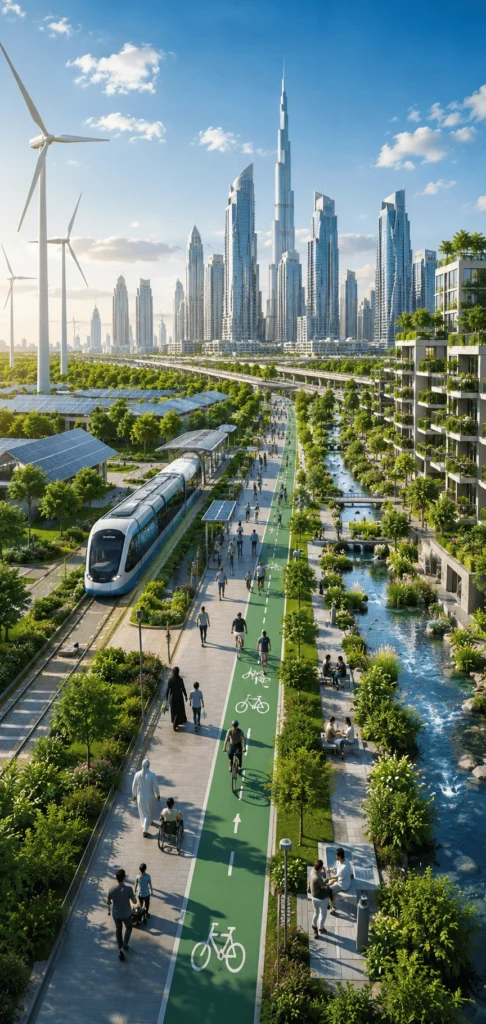
Sustainable communities are designed to support both environmental responsibility and human wellbeing. Effective urban planning helps create environments where people can live, work, learn, and socialize while minimizing environmental impact and improving overall quality of life.
Walkable neighborhoods, public transportation systems, green spaces, recreational facilities, and mixed-use developments contribute to healthier and more connected communities. These features encourage active lifestyles, reduce dependence on private transportation, and support social interaction.
Public transportation plays an important role in sustainable development by reducing congestion, improving mobility, and lowering environmental impact. Accessible transportation systems help connect residents with employment opportunities, educational institutions, healthcare facilities, and community services.
Green infrastructure also contributes significantly to community wellbeing. Parks, urban forests, water features, and open public spaces improve environmental quality while supporting physical and mental health. These environments help create more livable and resilient cities.
Sustainable housing remains an important component of community development. Housing strategies that prioritize accessibility, efficiency, and long-term sustainability help meet population needs while supporting environmental objectives and economic stability.
Infrastructure serves as the foundation for economic activity and national development. Efficient infrastructure systems enable trade, support investment, improve productivity, and strengthen competitiveness across industries.
Modern airports facilitate tourism, international business, trade, and global connectivity. High-quality air transport infrastructure supports economic diversification and international engagement.
Ports play a critical role in logistics, imports, exports, and supply chain efficiency. Strong port infrastructure improves trade performance and enhances economic competitiveness.
Reliable utilities such as electricity, water systems, and waste services are essential for both residential and commercial activities. Strong utility infrastructure supports economic stability and quality of life.
Digital communication networks support business operations, innovation, education, and public services. Telecommunications infrastructure has become a fundamental component of modern development.
Government and business services increasingly rely on digital platforms to improve efficiency, accessibility, and user experiences. Digital transformation helps streamline processes while expanding service availability.
Smart infrastructure integrates technology, data, and automation into physical systems to improve performance, efficiency, sustainability, and responsiveness.
Road infrastructure supports mobility, accessibility, and commercial activity. Well-developed transportation systems improve connectivity between communities, businesses, and economic centers.
Environmental stewardship focuses on protecting natural resources while supporting sustainable economic and social development. Responsible resource management helps ensure that environmental assets remain available for future generations.
Water conservation initiatives help reduce resource consumption, improve efficiency, and strengthen long-term sustainability. Technologies, awareness campaigns, and infrastructure improvements support more responsible water use.
Reducing emissions and improving environmental standards contribute to healthier living conditions and stronger public health outcomes. Continuous monitoring helps guide environmental improvement efforts.
Renewable energy sources such as solar, wind, and other clean technologies support energy diversification while reducing environmental impact. Investment in renewable energy contributes to long-term sustainability and energy security.
Waste reduction strategies focus on minimizing unnecessary consumption, increasing recycling rates, and improving resource recovery systems. These initiatives support environmental protection while promoting efficiency.
Circular economy principles encourage reuse, recycling, refurbishment, and resource optimization. By extending the life cycle of materials and products, circular systems help reduce waste and improve sustainability.
Protecting ecosystems and biodiversity contributes to environmental resilience and long-term ecological health. Biodiversity supports natural processes that benefit both communities and economies.
Technology is increasingly reshaping how infrastructure systems are planned, managed, and optimized. Smart infrastructure combines physical assets with digital technologies to improve efficiency, reliability, sustainability, and user experiences.
Smart cities use connected systems to monitor transportation, utilities, environmental conditions, public services, and resource consumption. These technologies enable more informed decision-making while helping improve operational performance.
Internet of Things (IoT) technologies allow infrastructure systems to collect and analyze real-time information. Sensors, connected devices, and intelligent platforms help identify issues, improve maintenance, and optimize resource usage.
Digital government services continue to improve accessibility and convenience for residents and businesses. Online platforms simplify administrative processes while increasing service efficiency and responsiveness.
Artificial intelligence and advanced analytics are also becoming important tools for infrastructure management. These technologies help support forecasting, optimization, automation, and long-term planning across multiple sectors.
| Area | Contribution |
|---|---|
| Air Quality | Supports healthier communities and environmental wellbeing |
| Water Resources | Ensures long-term sustainability and resource security |
| Waste Management | Reduces environmental impact and supports efficiency |
| Clean Energy | Promotes lower-carbon economic growth |
| Infrastructure Quality | Improves connectivity, accessibility, and productivity |
| Transport Systems | Facilitates mobility, logistics, and trade |
| Digital Infrastructure | Expands smart services and digital connectivity |
| Housing Access | Enhances quality of life and community stability |
| Logistics Performance | Strengthens competitiveness and economic efficiency |
| Online Services | Improves public service delivery and accessibility |
| Environmental Resilience | Supports long-term sustainability and adaptability |
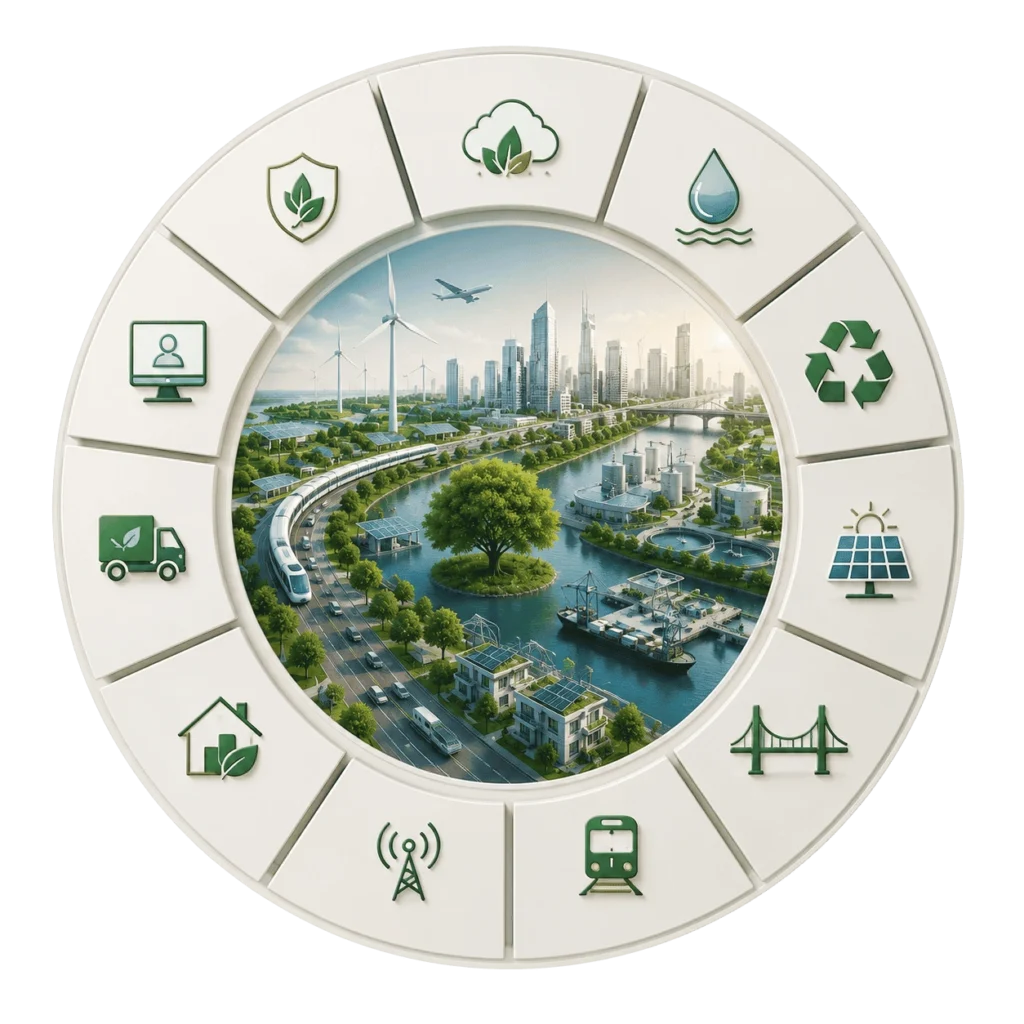
Sustainability and infrastructure continue to evolve as societies respond to environmental challenges, technological advancements, and changing economic needs. Several emerging trends are expected to shape future development strategies.
Renewable energy adoption is likely to accelerate as technology becomes more efficient and cost-effective. Clean energy investments will continue supporting environmental goals while strengthening long-term energy security.
Smart city initiatives are expected to expand through greater integration of digital technologies, connected infrastructure, automation, and real-time data management systems.
Green building practices will play an increasingly important role in reducing environmental impact and improving resource efficiency. Sustainable construction approaches focus on energy performance, water conservation, and healthier indoor environments.
Electric mobility solutions are transforming transportation systems. Electric vehicles, charging infrastructure, and alternative transportation technologies contribute to cleaner and more efficient mobility networks.
Circular economy strategies are gaining momentum as organizations seek to reduce waste, improve resource utilization, and support more sustainable production and consumption models.
Climate resilience is also becoming a major focus area. Future infrastructure projects increasingly consider long-term environmental risks while prioritizing adaptability and sustainability.
Long-term prosperity depends on the ability to balance economic growth with environmental responsibility and social wellbeing. Sustainable infrastructure supports economic activity while helping communities adapt to changing environmental and technological conditions.
Quality infrastructure improves productivity, strengthens competitiveness, and enhances quality of life. Environmental sustainability helps preserve resources, protect public health, and create healthier communities. Together, these priorities support resilient and prosperous societies.
Investments in sustainability and infrastructure often generate benefits that extend far beyond immediate economic outcomes. Improved transportation systems, cleaner environments, stronger digital connectivity, and efficient public services contribute to long-term development and opportunity.
As societies continue to evolve, maintaining this balance will remain essential for supporting future generations while ensuring continued economic growth and environmental stewardship.
Building a sustainable future requires continuous commitment, innovation, and long-term planning. Environmental protection and infrastructure development are not separate objectives but interconnected elements of successful national development strategies.
Modern societies depend on reliable infrastructure, efficient resource management, and responsible environmental practices to support growth while preserving quality of life. Investments made today help create stronger foundations for future generations.
Innovation will continue to play a central role in advancing sustainability objectives. Emerging technologies, smart infrastructure systems, renewable energy solutions, and digital transformation initiatives are creating new opportunities to improve efficiency and reduce environmental impact.
Environmental responsibility remains essential for protecting natural resources and supporting community wellbeing. Sustainable development ensures that progress can continue without compromising future opportunities or ecological stability.
Ultimately, prosperity depends on balance. By combining environmental stewardship, infrastructure excellence, technological innovation, and responsible resource management, societies can create resilient, sustainable, and thriving environments that support long-term success for generations to come.