
Education plays a central role in shaping the future of nations. Strong education systems contribute to economic growth, innovation, social development, and workforce readiness by providing individuals with the knowledge and skills needed to participate effectively in modern societies. Measuring educational performance helps policymakers, educators, institutions, and communities understand how effectively education systems are preparing learners for future opportunities and challenges.
Educational progress cannot be evaluated through a single metric. Instead, it requires a broad framework that considers student achievement, graduation outcomes, literacy levels, teaching quality, leadership effectiveness, early childhood participation, and overall learning environments. Together, these indicators provide a more complete picture of educational success and long-term development.
As economies become increasingly knowledge-driven, the ability to develop skilled, adaptable, and innovative individuals has become one of the most important factors influencing national competitiveness. Monitoring educational performance allows countries to identify strengths, address challenges, and continuously improve learning outcomes for future generations.
Education is one of the most significant investments a society can make. Beyond academic achievement, education influences workforce participation, innovation capacity, productivity, income growth, and social mobility. High-performing education systems help create environments where individuals can develop their talents, contribute to economic development, and improve their quality of life.
Learning outcomes serve as important indicators of how effectively educational systems are delivering knowledge and developing critical skills. Students who achieve strong outcomes in reading, mathematics, science, communication, and problem-solving are generally better prepared to succeed in higher education, employment, entrepreneurship, and lifelong learning.
Educational performance also influences national resilience. Societies with strong education systems are often better equipped to adapt to technological change, economic shifts, and emerging global challenges. As industries evolve and new professions emerge, education plays a vital role in preparing future generations with the skills necessary to navigate changing environments.
Furthermore, education contributes significantly to human capital development. Human capital refers to the collective knowledge, abilities, health, and competencies of a population. Nations with highly educated populations are often better positioned to attract investment, foster innovation, support research, and maintain long-term economic growth.
The connection between education and competitiveness has become increasingly important in the modern global economy. Countries that consistently invest in educational quality often experience stronger innovation ecosystems, higher productivity levels, and greater opportunities for sustainable development.
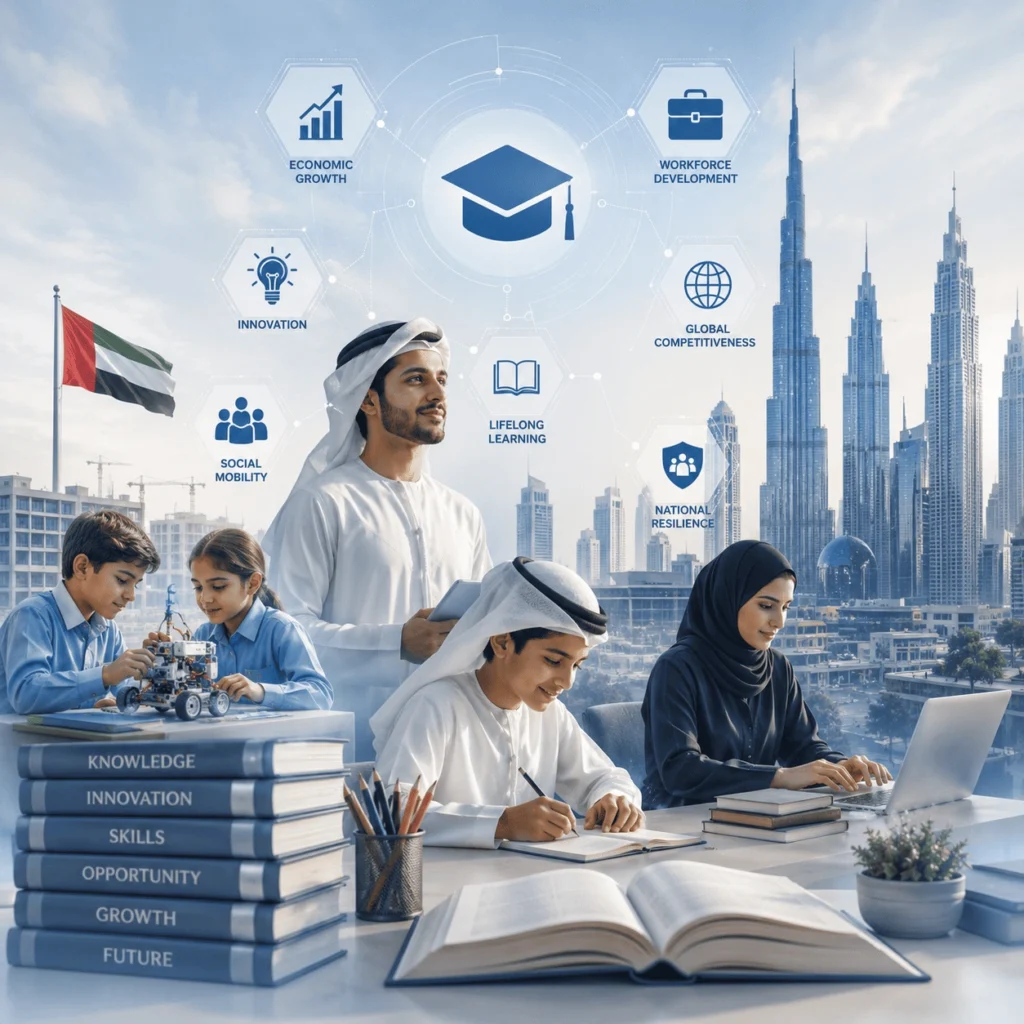
Educational excellence is measured through a combination of academic outcomes, institutional quality indicators, and developmental benchmarks. These measures help assess how effectively education systems support student growth and learning.
Student achievement remains one of the most widely used indicators of educational performance. International assessments such as TIMSS and PISA evaluate student proficiency in key subjects including mathematics, science, and reading. These assessments provide valuable insights into how students perform relative to international standards and help identify areas for improvement. Strong achievement outcomes often indicate effective teaching practices, quality curricula, supportive learning environments, and student engagement. They also help education systems evaluate the effectiveness of reforms and educational strategies over time.
Graduation rates provide important information about student progression and educational completion. High graduation rates suggest that students are successfully moving through educational pathways and obtaining qualifications necessary for future education and employment opportunities. University readiness and successful transitions into higher education also reflect the effectiveness of secondary education systems in preparing students for advanced learning and professional development.
Early childhood education plays a critical role in long-term academic success. Research consistently shows that children who participate in quality preschool programs often demonstrate stronger cognitive, social, and communication skills throughout their educational journeys. Enrollment rates in preschool and foundation programs help measure how effectively education systems support early learning and developmental readiness.
Language proficiency serves as a foundation for learning across all academic disciplines. Strong literacy skills improve reading comprehension, communication, critical thinking, and overall educational achievement. Language indicators may include reading performance, writing proficiency, communication skills, and mastery of national languages. These skills support both academic success and active participation in society.
Educational outcomes are strongly influenced by the quality of schools, teachers, and leadership teams. Effective educators help students achieve better learning outcomes, while strong leadership supports school improvement, innovation, accountability, and student wellbeing. School quality measures may include teacher qualifications, professional development, leadership effectiveness, accreditation standards, learning environments, and educational resources.
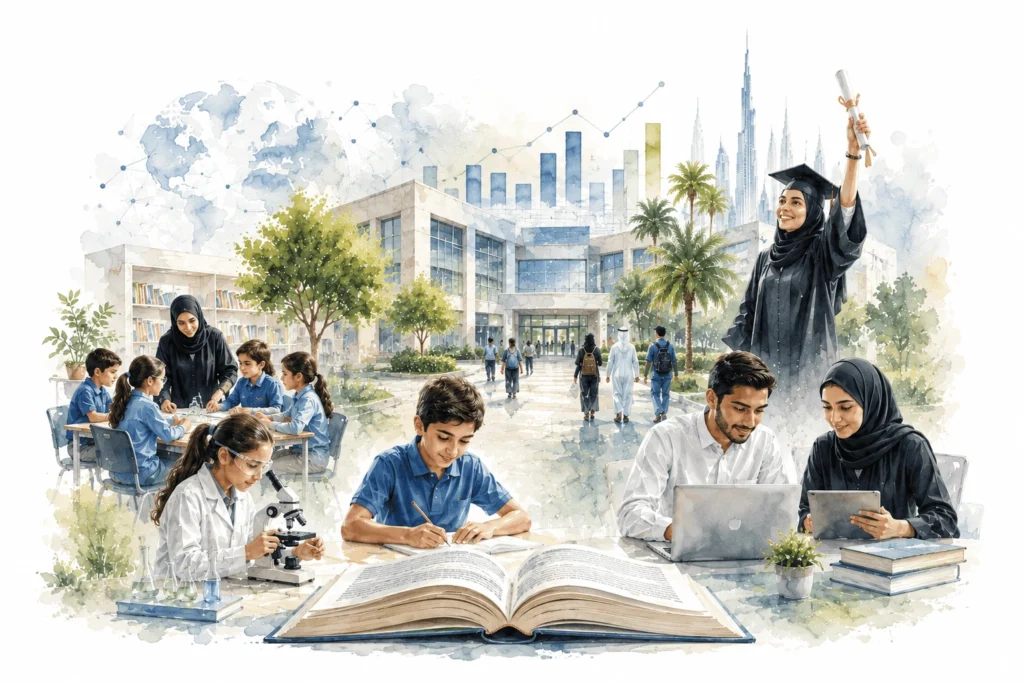
International benchmarking allows education systems to compare performance against globally recognized standards and identify opportunities for improvement. These benchmarks provide valuable perspectives on educational quality, student achievement, and institutional effectiveness.
The Trends in International Mathematics and Science Study (TIMSS) evaluates student performance in mathematics and science at various educational levels. TIMSS helps education systems assess how effectively students are developing quantitative reasoning, scientific understanding, and problem-solving abilities. Results from TIMSS provide insights into curriculum effectiveness, teaching quality, and educational outcomes in STEM-related subjects.
The Programme for International Student Assessment (PISA) measures the ability of students to apply knowledge and skills in real-world situations. Rather than focusing solely on curriculum content, PISA evaluates critical thinking, analytical reasoning, reading comprehension, scientific literacy, and mathematical problem-solving. PISA helps education systems understand how prepared students are for future academic, professional, and societal challenges.
Benchmarking against international standards provides valuable context for evaluating educational performance. Countries use comparative assessments to identify strengths, monitor progress, adopt best practices, and improve policy decisions. International comparisons also encourage continuous improvement by highlighting successful educational models and innovative approaches used around the world.
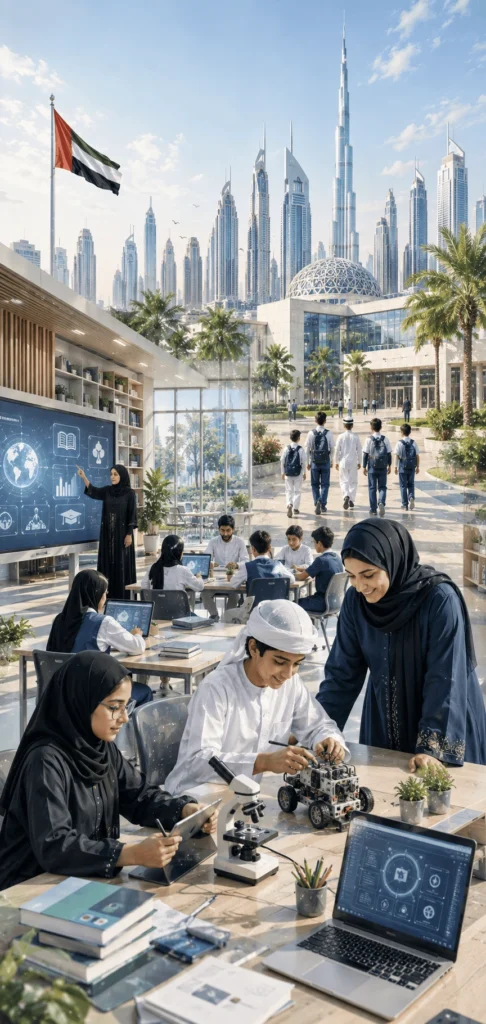
Education in the UAE has undergone significant transformation over recent decades through sustained investment, modernization initiatives, and a strong commitment to learning excellence. Educational development efforts have focused on improving quality, accessibility, innovation, and alignment with future workforce needs.
Technology has become an increasingly important component of modern learning environments. Smart classrooms, digital learning platforms, interactive educational tools, and online resources have expanded opportunities for students and educators while supporting more personalized learning experiences.
Teacher development continues to play a critical role in educational improvement. Ongoing professional training, leadership development programs, and educational innovation initiatives help strengthen teaching quality and support better student outcomes across all levels of education.
Curriculum modernization has also contributed to educational advancement. Contemporary curricula increasingly emphasize critical thinking, creativity, collaboration, communication, digital literacy, and practical problem-solving skills that align with evolving economic and societal demands.
Student-centered learning approaches have gained importance as educational systems seek to support individual strengths, interests, and learning styles. These approaches encourage engagement, independent thinking, and active participation in the learning process.
As educational needs continue to evolve, ongoing investment in infrastructure, technology, teacher quality, and research will remain important drivers of future educational development.
| Area | Contribution |
|---|---|
| Student Achievement | Measures academic performance and learning outcomes |
| Literacy | Supports communication, comprehension, and lifelong learning |
| STEM Education | Strengthens innovation, technology, and scientific capability |
| Teacher Quality | Improves instructional effectiveness and student achievement |
| School Leadership | Supports school improvement and educational excellence |
| Graduation Rates | Reflect successful educational progression and completion |
| Early Childhood Education | Builds strong developmental foundations for future learning |
| Language Skills | Enhances communication, literacy, and cultural understanding |
| Digital Learning | Expands educational accessibility and learning opportunities |
| Workforce Readiness | Aligns education with future employment and economic needs |
Education serves as a cornerstone of national competitiveness in the modern knowledge economy. Countries that successfully develop highly skilled populations are often better positioned to attract investment, foster innovation, and achieve sustainable economic growth.
Strong education systems contribute directly to workforce readiness. Employers increasingly seek individuals who possess technical knowledge, adaptability, communication skills, digital competencies, and critical thinking abilities. Educational institutions play a vital role in developing these capabilities.
Innovation is also closely connected to education. Researchers, scientists, engineers, entrepreneurs, and technology professionals rely on strong educational foundations to develop new ideas, products, and solutions. Educational excellence therefore supports broader innovation ecosystems and economic diversification efforts.
Entrepreneurship benefits significantly from educational development. Individuals with strong educational backgrounds are often better equipped to identify opportunities, solve problems, manage resources, and create value within evolving markets.
Education also supports productivity and economic performance. Skilled workforces contribute to higher levels of efficiency, competitiveness, and long-term prosperity while helping countries adapt to emerging industries and technological transformation.
As global competition increasingly centers on knowledge, innovation, and talent, educational performance remains one of the most important indicators of future economic potential.
Education continues to evolve alongside technological advancement, changing workforce demands, and emerging societal needs. Several trends are expected to shape the future of learning in the coming years.
Artificial intelligence is becoming increasingly integrated into educational environments. AI-powered learning tools can support personalized instruction, adaptive assessments, student engagement, and educational analytics.
Digital classrooms continue to expand learning opportunities through virtual platforms, collaborative technologies, and flexible educational models. These tools help increase accessibility while supporting diverse learning experiences.
Personalized learning approaches are gaining importance as educators seek to address individual student needs, strengths, and learning preferences. Technology enables more customized educational pathways that can improve engagement and outcomes.
Lifelong learning is becoming essential in rapidly changing economies. Continuous skill development, professional training, and ongoing education will help individuals remain adaptable throughout their careers.
Future education systems are also expected to place greater emphasis on critical thinking, creativity, collaboration, entrepreneurship, digital literacy, and problem-solving. These skills are increasingly valued across industries and professional environments.
As educational innovation continues to accelerate, institutions will need to remain flexible and responsive while maintaining strong foundations in academic quality and student development.
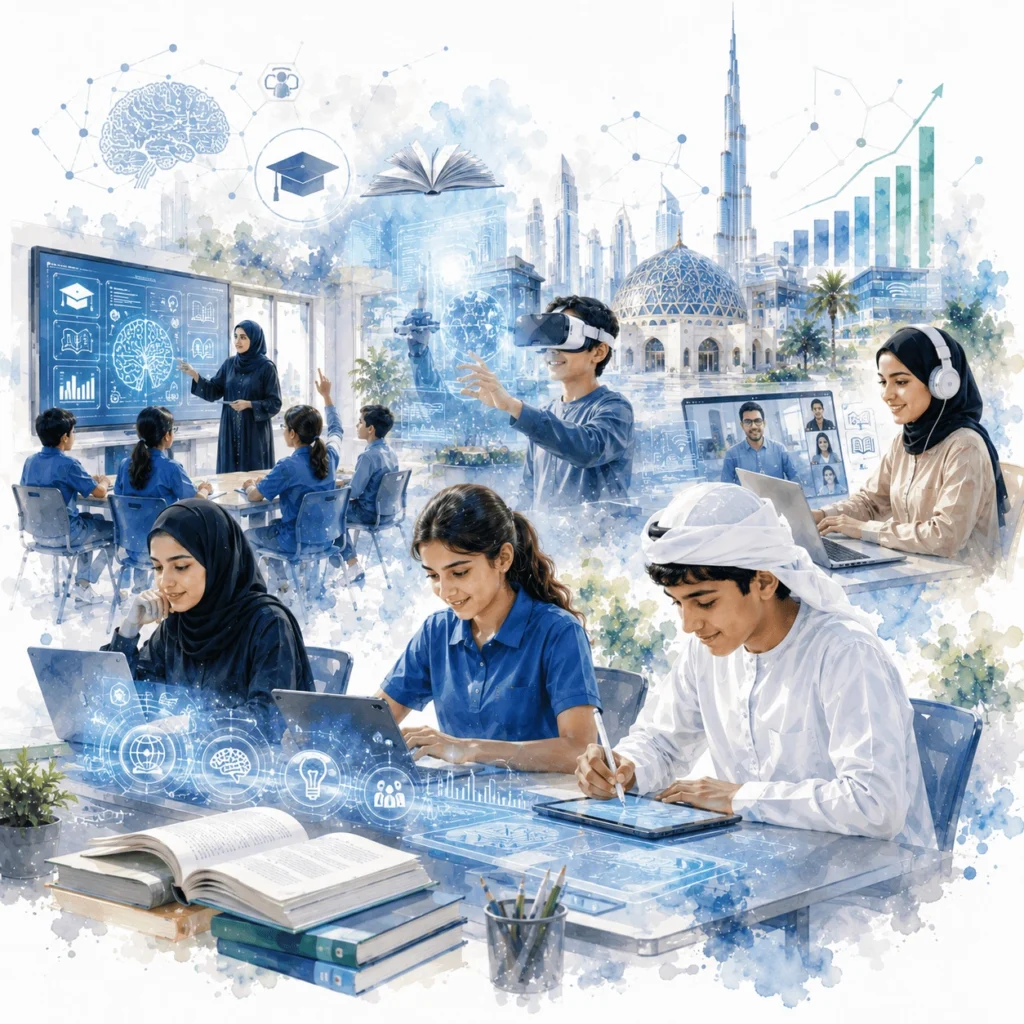
Education is far more than an academic pursuit. It is a strategic investment that influences economic growth, innovation, workforce development, social mobility, and national competitiveness. Strong education systems help individuals achieve their potential while supporting broader societal progress.
By measuring educational performance through meaningful indicators and internationally recognized benchmarks, policymakers and institutions can better understand how effectively education systems are serving learners and communities. These insights support informed decision-making and continuous improvement.
As nations continue to prepare for an increasingly knowledge-driven future, educational excellence will remain one of the most important foundations of long-term prosperity. Investments in learning, teaching quality, innovation, and student success contribute not only to individual achievement but also to stronger economies, more resilient societies, and sustainable development for generations to come.