
The world’s most competitive economies are increasingly shaped by knowledge, innovation, entrepreneurship, and the ability to adapt to change. As industries evolve and new technologies reshape markets, investment in talent, research, business creation, and productivity becomes a defining factor in long-term economic success. A competitive knowledge economy is built on people, ideas, and opportunities working together to create sustainable growth and future prosperity.
Economic growth is no longer driven solely by natural resources or traditional industries. Modern economies increasingly rely on innovation, technology, research, entrepreneurship, and highly skilled talent. Countries that successfully transform knowledge into products, services, and new industries are often better positioned to attract investment, create jobs, improve productivity, and remain competitive in rapidly changing global markets.

Research, technology, and new ideas create opportunities for industries to evolve and remain globally competitive.
New businesses and startups help transform ideas into economic activity, investment, and job creation.
Skilled professionals, specialists, and future leaders provide the expertise required to drive growth.
A strong business environment attracts capital, supports expansion, and enables long-term development.
Efficient industries and modern business practices strengthen competitiveness and economic resilience.
Future-ready economies continuously evolve to respond to changing technologies, markets, and global trends.
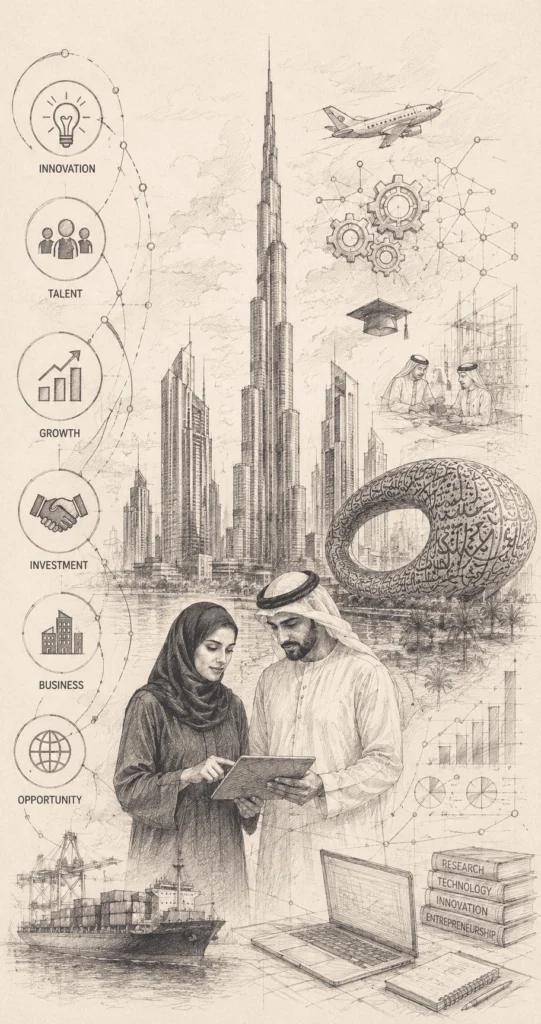
Innovation plays a central role in shaping competitive economies. From emerging technologies and digital transformation to scientific research and advanced industries, innovation creates new possibilities for businesses, investors, and communities. Economies that encourage experimentation, creativity, and research often generate stronger opportunities for long-term growth and global competitiveness.
Entrepreneurship remains one of the most important drivers of economic development. Small businesses, startups, and high-growth companies contribute to innovation, job creation, and investment activity across multiple industries. A supportive business environment encourages individuals to transform ideas into enterprises while creating opportunities that benefit wider economic ecosystems.
Strong economies attract more than capital. They attract skilled professionals, innovators, researchers, and entrepreneurs seeking opportunities to grow and contribute. Competitive business environments supported by modern infrastructure, access to markets, and forward-looking policies help create conditions where talent and investment can thrive together.
| Foundation | Contribution |
|---|---|
| Innovation | New products, technologies, and industries |
| Entrepreneurship | Business creation and economic activity |
| Talent | Skills, expertise, and leadership |
| Investment | Capital and market expansion |
| Productivity | Greater efficiency and competitiveness |
| Research | Knowledge creation and discovery |
| Adaptability | Long-term resilience and future readiness |
Learning fuels expertise. Expertise drives innovation. Innovation creates businesses. Businesses generate investment, productivity, and opportunity. Together, these foundations help economies remain competitive in an increasingly connected world.
Strong communities create stable foundations for growth and participation.
Trust, security, and effective institutions support confidence and investment.
Education develops the talent and skills required for future industries.
Healthy populations contribute to productivity, wellbeing, and economic resilience.
Modern infrastructure and sustainable development support long-term competitiveness.
The most successful economies are often those that continuously invest in people, ideas, and opportunity. Innovation, entrepreneurship, research, and talent development remain essential ingredients for creating resilient industries, attracting investment, and supporting sustainable growth in an increasingly competitive global economy.