vision2021.ae

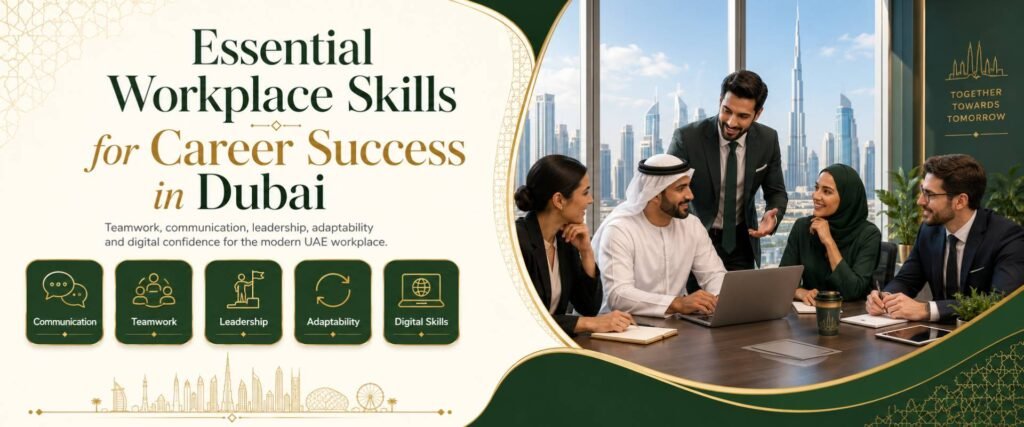
Essential Workplace Skills for Career Success in Dubai 2026

Essential Workplace Skills for Career Success in Dubai 2026

Introduction

Dubai continues to attract professionals from around the world due to its dynamic economy, international business environment, and growing opportunities across multiple industries. As the city advances its vision for innovation, technology adoption, and economic diversification, employers increasingly seek professionals who can contribute beyond technical qualifications alone.

In 2026, career growth is shaped not only by industry knowledge but also by the ability to communicate effectively, collaborate with diverse teams, adapt to change, and continuously develop new capabilities. The growing importance of digital transformation, artificial intelligence, and knowledge-based industries has made workplace competencies more valuable than ever before.

Understanding the Essential Workplace Skills can help students, graduates, professionals, and leaders navigate evolving workplace expectations. Whether working in finance, healthcare, technology, logistics, tourism, or professional services, developing strong workplace skills can support long-term professional growth and adaptability.

Dubai’s multicultural workforce, technology-driven economy, and focus on innovation continue to shape the future of work. As a result, professionals who invest in both technical expertise and transferable skills are often better positioned to succeed in an increasingly competitive environment.

Why Workplace Skills Matter in Dubai

Workplace skills play a critical role in modern organizations. While technical expertise remains important, employers increasingly recognize that professional success often depends on communication, teamwork, leadership, problem-solving, and adaptability.

Dubai’s economy is built on international business, innovation, and collaboration. Professionals frequently work with colleagues, clients, and stakeholders from different countries, cultures, and industries. In such an environment, strong workplace capabilities become essential for both individual performance and organizational success.

Dubai’s Evolving Workforce

Dubai’s workforce continues to evolve alongside growth in sectors such as technology, finance, healthcare, logistics, tourism, and professional services.

Technology companies increasingly seek professionals who can work within digital environments and adapt to rapid innovation. Financial institutions value analytical thinking and communication skills. Healthcare organizations depend on collaboration and problem-solving, while logistics and tourism sectors require strong customer interaction and operational efficiency.

As industries continue to modernize, workplace capabilities across Dubai’s economy are becoming increasingly important across nearly every profession.

Why Employers Prioritize Workplace Skills

Employers often view workplace skills as indicators of long-term potential.

Professionals who communicate clearly, collaborate effectively, manage responsibilities, and adapt to change often contribute positively to workplace productivity and team performance. Strong workplace capabilities also support leadership development, career progression, and organizational effectiveness.

In many cases, employers can provide technical training when necessary. Developing communication, critical thinking, emotional intelligence, and adaptability, however, often requires consistent effort and practical experience over time.

How Dubai’s Workforce Is Changing in 2026

The nature of work continues to change as organizations adopt new technologies and respond to evolving market conditions. Across Dubai, workforce expectations are increasingly shaped by digital transformation, innovation, and the growth of knowledge-based industries.

Initiatives such as the Dubai Economic Agenda (D33) and broader national development strategies including We the UAE 2031 emphasize economic competitiveness, innovation, entrepreneurship, and workforce development. These priorities influence the types of skills organizations value when recruiting and developing talent.

Artificial intelligence, automation, cloud technologies, and advanced digital platforms are transforming how businesses operate. As a result, many organizations now seek employees who can combine technical knowledge with communication, collaboration, and adaptability.

According to the World Economic Forum’s Future of Jobs Report, analytical thinking, adaptability, leadership, and technology-related skills are expected to remain among the most important workforce capabilities globally through the coming years. These trends are increasingly reflected across Dubai’s evolving labor market.

As workforce expectations continue evolving, understanding the most in-demand skills in the UAE job market can help professionals align their development efforts with emerging industry needs.

Workforce requirements are expanding beyond traditional qualifications. Employers increasingly evaluate a candidate’s ability to learn continuously, solve complex challenges, and work effectively within diverse teams.

This shift highlights the growing importance of Professional Skills for Career Success, particularly as industries continue adapting to technological and economic change.

Workplace Skills Most Valued by Employers in Dubai

Different organizations may prioritize different competencies, but several workplace skills consistently appear across industries. These skills support productivity, teamwork, leadership development, and long-term career growth.

What Workplace Skills Are Most Important in Dubai?

The workplace skills most valued in Dubai include communication, adaptability, teamwork, leadership, digital literacy, emotional intelligence, critical thinking, and problem-solving. These competencies help professionals collaborate within multicultural environments, respond to workplace change, use technology effectively, and contribute to organizational success. As industries continue embracing digital transformation and innovation, employers increasingly seek individuals who can combine technical expertise with strong interpersonal and professional capabilities. Developing these skills can support long-term career growth across a wide range of sectors.

Workplace Skills Overview Table

Workplace Skill Why It Matters in Dubai
Communication Multicultural workforce
Teamwork Diverse project teams
Problem Solving Dynamic business environment
Adaptability Rapid workplace change
Leadership Career progression
Digital Literacy Technology adoption
Emotional Intelligence Workplace relationships
Time Management Productivity
Critical Thinking Better decision-making
Creativity Innovation

Together, these capabilities form the foundation of the Essential Workplace Skills in modern organizations. While technical expertise remains important, these workplace competencies often influence how effectively professionals contribute within teams, manage responsibilities, and adapt to future opportunities.

How Can Professionals Improve Workplace Skills in Dubai?

Professionals can improve workplace skills through continuous learning, professional certifications, mentorship, workplace experience, digital skills development, and participation in industry training programs. Regular exposure to new challenges, technologies, and collaborative environments helps strengthen communication, leadership, adaptability, and problem-solving abilities. Lifelong learning remains one of the most effective ways to stay competitive in Dubai’s evolving workforce.

Communication Skills in a Multicultural Workplace

Communication is one of the most valuable skills in any professional environment. In Dubai, where organizations often bring together employees from diverse cultural and professional backgrounds, effective communication plays an especially important role.

Strong communication supports teamwork, reduces misunderstandings, improves productivity, and helps build professional relationships. It also contributes to successful client interactions and organizational collaboration.

Verbal Communication

Verbal communication involves expressing ideas clearly and confidently during conversations, meetings, presentations, and discussions.

Professionals who communicate effectively can share information accurately, contribute to decision-making processes, and build stronger working relationships with colleagues and stakeholders.

Professional Writing

Written communication remains essential across industries. Emails, reports, proposals, project updates, and internal documentation all require clarity and professionalism.

Strong writing skills help ensure information is communicated accurately while supporting effective collaboration across departments and organizations.

Presentation Skills

Many professional roles require individuals to present ideas, project updates, business proposals, or research findings.

Presentation skills involve organizing information logically, engaging audiences effectively, and communicating messages with confidence and clarity.

Active Listening

Communication involves listening as much as speaking.

Active listening allows professionals to understand concerns, gather information, clarify expectations, and build trust within teams and organizations.

Cross-Cultural Communication

One of the defining characteristics of Workplace Skills in Dubai is the ability to communicate effectively within multicultural environments.

Professionals frequently collaborate with colleagues, clients, and stakeholders representing different cultures, languages, and professional experiences. Cultural awareness, respect, and adaptability help strengthen communication and support positive workplace relationships.

Real Workplace Example

A project team in Dubai may include engineers from Europe, finance specialists from Asia, marketing professionals from the Middle East, and operations managers from Africa. Successful project delivery often depends on clear communication, active listening, and mutual understanding among all team members.

Teamwork and Collaboration

Modern organizations rely heavily on collaboration. Projects frequently involve multiple departments, specialized expertise, and diverse perspectives working together toward shared objectives.

Effective teamwork supports innovation, improves problem-solving capabilities, and contributes to stronger organizational performance.

Working Within Diverse Teams

Diverse teams bring together individuals with different experiences, skills, and viewpoints.

When managed effectively, diversity can strengthen creativity, decision-making, and organizational resilience.

Cross-Department Collaboration

Many workplace initiatives require cooperation between departments such as operations, marketing, finance, technology, and human resources.

Strong collaboration helps organizations improve efficiency while reducing communication barriers between teams.

Building Professional Relationships

Professional relationships support trust, cooperation, and knowledge sharing within organizations.

Developing positive working relationships can contribute to stronger teamwork and improved workplace experiences.

Conflict Resolution

Differences in opinions and approaches are natural within collaborative environments.

Conflict resolution skills help professionals address disagreements constructively while maintaining productive working relationships.

Real Workplace Example

A technology implementation project may require coordination between software developers, finance teams, project managers, and customer service representatives. Effective teamwork ensures that each department contributes its expertise while working toward a common objective.

Problem Solving and Critical Thinking

Problem-solving and critical thinking are among the most valuable competencies in today’s workplace. Organizations increasingly seek professionals who can analyze situations, evaluate information, and make informed decisions.

These skills support innovation, operational efficiency, and long-term business success.

Identifying Workplace Challenges

The first step in problem-solving is recognizing challenges accurately.

Professionals must be able to identify issues, understand root causes, and gather relevant information before developing solutions.

Evaluating Information

Critical thinking requires careful analysis of available information.

Rather than relying on assumptions, professionals assess evidence, consider alternative perspectives, and evaluate potential outcomes before making decisions.

Developing Effective Solutions

Successful problem-solving often involves creativity, collaboration, and strategic thinking.

Professionals who can generate practical solutions contribute to organizational adaptability and performance.

Making Informed Decisions

Decision-making is a key component of both leadership and daily workplace responsibilities.

Strong critical thinking helps professionals make decisions that support organizational objectives while managing risks effectively.

Real Workplace Example

A logistics company experiencing delivery delays may analyze operational data, identify bottlenecks, evaluate alternative approaches, and implement process improvements to enhance efficiency and customer satisfaction.

Adaptability and Continuous Learning

Adaptability has become one of the most important workplace competencies in modern organizations. As industries continue evolving through digital transformation, artificial intelligence, and changing business models, professionals must be prepared to learn, adjust, and respond to new challenges.

Organizations increasingly value individuals who can embrace change while maintaining productivity and effectiveness.

Responding to Workplace Change

Change is a constant feature of modern workplaces. New technologies, market conditions, customer expectations, and business strategies often require employees to adjust their approaches and responsibilities.

Adaptable professionals are generally better equipped to navigate uncertainty and contribute positively during periods of organizational change.

Learning New Technologies

Technology continues reshaping industries across Dubai’s economy.

Professionals who are willing to learn new systems, software platforms, and digital tools often remain more competitive within evolving workplaces.

Upskilling and Reskilling

Upskilling focuses on enhancing existing capabilities, while reskilling involves learning entirely new competencies to meet changing workforce requirements.

Both approaches are becoming increasingly important as automation and digital transformation influence job roles across industries.

Lifelong Learning

Continuous learning has become a key characteristic of successful professionals.

Rather than viewing education as something that ends after graduation, many professionals now engage in ongoing training, certifications, workshops, and self-directed learning throughout their careers.

Real Workplace Example

A finance professional who learns data analytics tools and AI-assisted reporting systems may be better positioned to adapt as financial services increasingly embrace automation and digital decision-making.

Leadership Skills

Leadership is often associated with management positions, but leadership capabilities are valuable at every stage of a professional career.

Strong leaders contribute to workplace success by taking initiative, supporting colleagues, making informed decisions, and helping teams achieve shared objectives.

Taking Initiative

Initiative involves identifying opportunities, solving problems proactively, and contributing beyond minimum job requirements.

Organizations frequently value employees who demonstrate ownership and actively contribute to workplace improvement.

Accountability and Responsibility

Accountability means accepting responsibility for actions, decisions, and outcomes.

Professionals who demonstrate accountability often build trust and credibility within their organizations.

Decision-Making

Effective leaders evaluate information carefully and make decisions that align with organizational goals and priorities.

Decision-making skills become increasingly important as professionals progress into more senior roles.

Motivating and Supporting Others

Leadership includes helping colleagues perform at their best.

Supporting team members, sharing knowledge, and encouraging collaboration can strengthen overall organizational performance.

Real Workplace Example

A project coordinator may not hold a management title but can demonstrate leadership by organizing team activities, resolving challenges, and ensuring project objectives remain on track.

Emotional Intelligence and Professional Relationships

Technical expertise alone is rarely sufficient for long-term professional success. Emotional intelligence helps individuals understand their own emotions, recognize the perspectives of others, and manage workplace relationships effectively.

As organizations become increasingly collaborative, emotional intelligence continues growing in importance.

Self-Awareness

Self-awareness involves understanding personal strengths, weaknesses, behaviors, and emotional responses.

Professionals who possess self-awareness often make better decisions regarding communication, collaboration, and professional development.

Self-Regulation

Self-regulation refers to managing emotions appropriately within professional environments.

Remaining calm under pressure, handling challenges constructively, and responding thoughtfully to difficult situations can improve workplace effectiveness.

Empathy

Empathy involves understanding the experiences and perspectives of others.

In diverse workplaces, empathy helps strengthen collaboration, communication, and professional relationships.

Relationship Management

Successful workplace relationships are built through trust, respect, communication, and cooperation.

Strong relationship-management skills support teamwork, leadership, and customer interactions.

Real Workplace Example

A manager working with a multicultural team may need to understand different communication styles and professional expectations to create an inclusive and productive work environment.

Time Management and Productivity

Time management plays a significant role in workplace performance. Professionals are often expected to manage multiple responsibilities while maintaining quality, meeting deadlines, and supporting organizational objectives.

Effective time management helps individuals remain productive while reducing unnecessary stress.

Prioritization

Prioritization involves focusing attention on tasks that have the greatest impact and urgency.

Professionals who prioritize effectively can allocate resources more efficiently and improve overall performance.

Goal Setting

Clear goals help guide daily activities and long-term professional development.

Goal setting provides direction while helping individuals measure progress and maintain motivation.

Managing Deadlines

Meeting deadlines is an important aspect of professional reliability.

Strong planning and organizational skills help ensure projects remain on schedule.

Workplace Efficiency

Efficiency involves completing tasks effectively while making the best use of available resources and time.

Improved efficiency can contribute to higher productivity and better workplace outcomes.

Real Workplace Example

A marketing professional managing multiple campaigns may use scheduling tools, project-management systems, and priority frameworks to ensure deadlines are consistently achieved.

Digital Literacy and Technology Skills

Technology is now integrated into nearly every industry and profession. As digital transformation accelerates across Dubai’s economy, digital literacy has become one of the most valuable workplace competencies.

Many of the Essential Workplace Skills now involve understanding and effectively using technology.

Workplace Technology Platforms

Digital collaboration platforms have become essential for communication and productivity.

Examples include:

  • Microsoft Teams
  • Zoom
  • Google Workspace

These tools support meetings, document sharing, project collaboration, and communication across geographically distributed teams.

Data Literacy

Data literacy involves understanding, interpreting, and using information to support decision-making.

As organizations increasingly rely on analytics and performance metrics, data literacy continues to grow in importance.

Digital Collaboration

Modern workplaces frequently operate across locations, departments, and time zones.

Digital collaboration skills help professionals work effectively within distributed and hybrid work environments.

Artificial Intelligence Tools

Artificial intelligence is becoming increasingly integrated into workplace processes.

Examples include:

  • ChatGPT
  • Microsoft Copilot
  • Workplace automation tools

Professionals who understand how to use AI responsibly and effectively may gain productivity advantages while supporting organizational innovation.

Technology and the Digital Economy

Dubai’s focus on innovation, smart-city initiatives, and the Dubai Economic Agenda D33 continues driving demand for digital capabilities across industries.

As organizations adopt new technologies, Professional Skills for Career Success increasingly include digital literacy, technology awareness, and adaptability to emerging workplace tools.

Real Workplace Example

A customer service professional using AI-powered support systems and analytics dashboards can provide faster responses while improving service quality and customer satisfaction.

Creativity and Innovation

Creativity is often misunderstood as an artistic skill, but in professional environments it is primarily about generating ideas, solving problems, and improving processes.

Organizations rely on creativity to remain competitive, respond to change, and identify new opportunities.

Generating New Ideas

Creative thinking helps professionals explore alternative solutions and identify opportunities for improvement.

Improving Workplace Processes

Innovation often involves making existing systems more effective, efficient, and user-friendly.

Supporting Business Innovation

Organizations that encourage innovation are often better positioned to adapt to changing markets and customer expectations.

Creative Problem Solving

Creativity and problem-solving frequently work together.

Professionals who can think beyond conventional approaches often contribute valuable insights and solutions.

Real Workplace Example

A logistics team that redesigns delivery routes using data analysis and technology may improve operational efficiency while reducing costs.

Workplace Skills Across Different Career Stages

The importance of workplace skills remains consistent throughout a career, although priorities may evolve as professional responsibilities change.

Students and Graduates

Students entering the workforce often focus on communication, teamwork, adaptability, and foundational professional skills.

Early-Career Professionals

Professionals in the early stages of their careers frequently strengthen workplace communication, problem-solving, and productivity capabilities.

Mid-Career Professionals

As responsibilities increase, leadership, strategic thinking, and decision-making often become more important.

Managers and Leaders

Senior professionals frequently emphasize leadership, emotional intelligence, mentorship, and organizational influence.

How Professionals Can Develop Workplace Skills

Workplace skills can be developed through deliberate practice, learning opportunities, and professional experience.

Professional Training Programs

Training programs help individuals strengthen workplace competencies while staying current with industry developments.

Industry Certifications

Certifications can demonstrate expertise while supporting professional development goals.

Workplace Experience

Practical experience remains one of the most effective methods for developing workplace skills.

Mentorship

Learning from experienced professionals can provide valuable insights and guidance.

Online Learning

Digital learning platforms offer flexible opportunities to develop new capabilities and expand knowledge.

Continuous Self-Improvement

Regular reflection, feedback, and skill development help professionals remain competitive in evolving workplaces.

Common Workplace Skill Challenges in Dubai

Professionals working in dynamic international environments often face unique workplace challenges.

Communicating Within Multicultural Teams

Diverse workplaces require cultural awareness, adaptability, and effective communication.

Adapting to Rapid Workplace Change

Technology adoption and evolving business practices require ongoing learning and flexibility.

Building Digital Confidence

Many professionals must continuously strengthen their technology capabilities to remain effective in modern workplaces.

Managing Diverse Stakeholder Expectations

Professionals often interact with clients, colleagues, regulators, suppliers, and business partners who have different priorities and expectations.

Balancing Productivity and Continuous Learning

Maintaining performance while developing new skills remains one of the most common challenges in modern professional environments.

Workplace Skills and the Future of Work in Dubai

The future of work continues evolving through technological innovation, changing workforce expectations, and new business models.

Artificial Intelligence and Automation

AI technologies are transforming how work is performed across industries.

Digital Transformation

Organizations continue investing in technology to improve efficiency, innovation, and competitiveness.

Hybrid Work Models

Flexible work arrangements are reshaping collaboration and workplace management.

Smart Economy Initiatives

Dubai’s innovation strategies continue supporting technology adoption and workforce modernization.

Human-Centered Skills

Despite technological advancement, human skills such as communication, leadership, creativity, and emotional intelligence remain highly valuable.

Lifelong Learning Culture

Continuous learning is expected to remain an important component of future career success.

How Workplace Skills Support the UAE Knowledge Economy

A skilled workforce plays a central role in economic growth, innovation, and global competitiveness. Workplace skills support not only individual career success but also broader national development objectives.

Building a Skilled Workforce

Developing professional capabilities helps strengthen workforce productivity and long-term economic resilience.

Supporting Innovation

Innovation thrives when professionals can communicate, collaborate, and solve complex challenges effectively.

Encouraging Entrepreneurship

Workplace competencies such as leadership, adaptability, and problem-solving support entrepreneurial activity and business growth.

Improving Global Competitiveness

Organizations benefit when employees possess strong professional capabilities that improve performance and efficiency.

Building a Competitive Knowledge Economy

Dubai’s focus on innovation, technology, and workforce development aligns closely with the goal of creating a competitive knowledge economy supported by skilled professionals.

This discussion connects naturally with broader initiatives such as Competitive Knowledge Economy, First-Rate Education System, United in Knowledge, and National Key Performance Indicators that support long-term workforce development and economic progress.

Frequently Asked Questions

What workplace skills are most important in Dubai?

Some of the most valued workplace skills in Dubai include communication, teamwork, adaptability, problem-solving, leadership, digital literacy, emotional intelligence, and critical thinking. These skills help professionals succeed within multicultural and technology-driven work environments.

Why do employers value communication skills?

Communication supports collaboration, productivity, customer interactions, and workplace relationships. Clear communication helps reduce misunderstandings and improves organizational effectiveness.

How can professionals improve workplace skills?

Professionals can strengthen workplace skills through training programs, certifications, mentorship, practical experience, continuous learning, and exposure to new workplace challenges.

Why is adaptability important in modern workplaces?

Adaptability helps professionals respond effectively to changing technologies, business requirements, industry trends, and organizational priorities. It is increasingly important as workplaces continue evolving.

What role does digital literacy play in career success?

Digital literacy enables professionals to use workplace technologies, collaborate effectively, analyze information, and adapt to digital transformation. It has become a fundamental competency across many industries.

Why is emotional intelligence important at work?

Emotional intelligence supports communication, teamwork, leadership, conflict resolution, and relationship management. It helps professionals work effectively with colleagues, customers, and stakeholders.

How do leadership skills support career growth?

Leadership skills help professionals take initiative, make informed decisions, support team performance, and manage responsibilities effectively. These capabilities often contribute to long-term career progression.

What workplace skills will be most valuable in the future?

Communication, adaptability, digital literacy, critical thinking, creativity, emotional intelligence, leadership, and continuous learning are expected to remain highly valuable as workplaces continue evolving.

How do workplace skills contribute to organizational success?

Strong workplace skills improve productivity, collaboration, innovation, decision-making, and operational efficiency. These capabilities help organizations achieve their objectives more effectively.

How do workplace skills support economic growth?

A skilled workforce contributes to innovation, competitiveness, entrepreneurship, productivity, and sustainable economic development. Workplace skills play an important role in supporting knowledge-based economies and future workforce readiness.

Conclusion

Workplace success increasingly depends on more than technical qualifications alone. As Dubai continues strengthening its position as a global business, innovation, and knowledge hub, professionals are expected to combine technical expertise with strong workplace capabilities that support collaboration, adaptability, leadership, and continuous development.

Communication, teamwork, problem-solving, emotional intelligence, digital literacy, time management, creativity, and leadership remain among the essential workplace skills across industries. These competencies help professionals contribute effectively within diverse teams, respond to workplace change, and navigate increasingly complex professional environments.

The importance of Workplace Skills in Dubai continues growing as organizations adopt new technologies, embrace digital transformation, and compete within an increasingly global economy. Employers are not only seeking technical expertise but also individuals who can communicate effectively, work collaboratively, and adapt to evolving business needs.

Developing Professional Skills for Career Success is an ongoing process rather than a one-time achievement. Through continuous learning, practical experience, mentorship, and professional development, individuals can strengthen their capabilities and remain competitive throughout their careers.

Looking ahead to 2026 and beyond, workplace skills will continue supporting professional achievement, organizational performance, innovation, and economic competitiveness. As Dubai advances its vision for a knowledge-driven future, professionals who invest in lifelong learning and skill development will be better positioned to contribute to both personal career growth and broader workforce success.

Share this post

Discover More

Scroll to Top