vision2021.ae

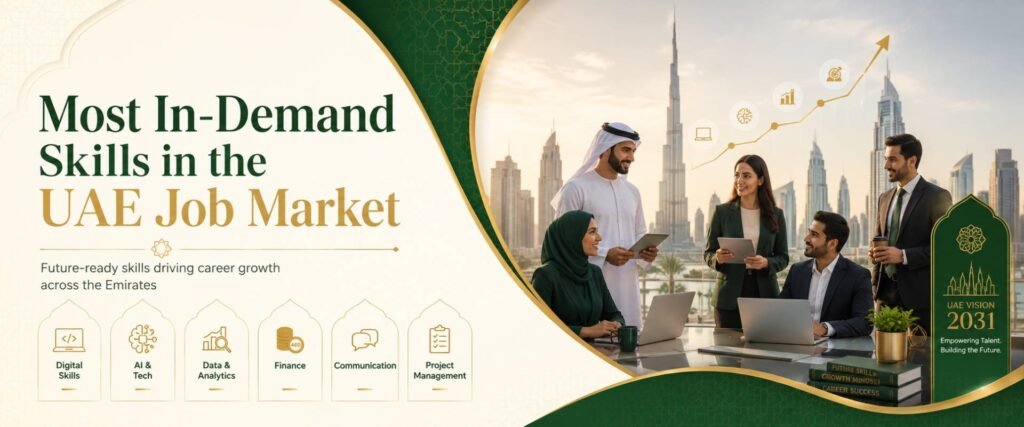
Most In-Demand Skills in the UAE Job Market

Most In-Demand Skills in the UAE Job Market

Introduction

The UAE job market has undergone significant transformation over the past decade. Driven by digital innovation, economic diversification, technological advancement, and investment in knowledge-based industries, employers are increasingly looking for professionals who can adapt to changing workplace demands and contribute to long-term organizational growth.

As industries evolve, technical expertise alone is no longer enough. Companies also value communication, leadership, problem-solving, and adaptability. The combination of technical and interpersonal capabilities has become increasingly important across sectors ranging from technology and healthcare to finance, education, and logistics.

Understanding the most in-demand skills in the UAE job market in 2026 can help students, job seekers, and working professionals make informed decisions about education, training, and career development. By focusing on skills that align with market needs, individuals can improve their employability and remain competitive in a rapidly changing economy.

UAE Job Market Trends and Demand Indicators

Several factors continue to shape workforce demand across the UAE.

  • Rapid digital transformation across industries
  • Growing investment in artificial intelligence and advanced technologies
  • Expansion of healthcare and life sciences sectors
  • Increased focus on sustainability and renewable energy
  • Continued development of logistics, trade, and infrastructure projects
  • Strong emphasis on innovation and knowledge-based economic growth

These trends have created new opportunities for professionals with specialized expertise while increasing demand for adaptable workers capable of learning new skills throughout their careers.

As of 2026, workforce demand continues to be influenced by technological innovation, artificial intelligence adoption, sustainability initiatives, digital transformation, healthcare expansion, and the growth of knowledge-based industries across the UAE.

Top 15 Most In-Demand Skills in the UAE Job Market

The skills employers seek in 2026 reflect broader economic and technological changes taking place across the UAE and global economy. While some skills remain industry-specific, others are valuable across nearly every sector.

Skills Overview Table

Skill Main Industries Why It Is In Demand
Artificial Intelligence Technology Automation and innovation
Data Analytics Technology, Finance Data-driven decisions
Cybersecurity Finance, Government, Technology Digital security
Cloud Computing Technology Business modernization
Software Development Technology Digital products and services
Digital Marketing Marketing, E-commerce Online growth
Project Management Construction, IT Complex projects
Financial Analysis Banking, Finance Strategic planning
Communication Skills All Industries Collaboration
Leadership Management Team growth
Problem Solving All Industries Operational efficiency
Sales & Business Development Commercial Revenue generation
Healthcare Skills Healthcare Growing demand
Logistics & Supply Chain Trade, Transport Global commerce
Sustainability & Green Skills Energy, Infrastructure Future economy

Many of these in-demand skills in UAE workplaces are expected to remain highly valuable as organizations continue investing in innovation, efficiency, and workforce development.

Artificial Intelligence and Machine Learning

Artificial intelligence has become one of the fastest-growing areas of expertise in the modern workforce. Organizations across multiple sectors are exploring AI-powered solutions to improve productivity, automate repetitive tasks, enhance customer experiences, and support data-driven decision-making.

Professionals with knowledge of tools and technologies such as ChatGPT, Microsoft Copilot, Python, TensorFlow, and machine learning frameworks are increasingly valuable. These skills are relevant in industries ranging from finance and healthcare to education and logistics.

According to workforce and recruitment reports, demand for AI-related expertise has increased significantly as organizations invest in automation, predictive analytics, intelligent business systems, and digital transformation initiatives. Professionals who understand both the technology and its practical applications are increasingly supporting innovation across multiple industries.

Data Analytics and Business Intelligence

Data has become one of the most valuable assets for modern organizations. Companies rely on information to identify trends, measure performance, understand customer behavior, and make strategic decisions.

Professionals skilled in Power BI, Tableau, SQL, advanced Excel, and business intelligence platforms help transform raw information into actionable insights. Their work supports decision-making across departments including finance, operations, marketing, and management.

Because organizations increasingly depend on data to guide business strategies, analytics remains among the top skills for jobs in UAE across a wide range of industries.

Cybersecurity

As digital systems become more important, protecting information and technology infrastructure has become a critical business priority.

Cybersecurity professionals help organizations identify risks, strengthen defenses, monitor threats, and respond to security incidents. Their responsibilities often include information security management, risk assessment, compliance, and security planning.

Certifications such as CISSP, CEH, and CompTIA Security+ are widely recognized within the field and demonstrate specialized expertise. The increasing frequency and sophistication of cyber threats have encouraged governments, financial institutions, healthcare organizations, and private companies to invest heavily in cybersecurity capabilities. As digital systems become more interconnected, professionals with security expertise play a critical role in protecting information and infrastructure.

Cloud Computing

Cloud technology has transformed how organizations store information, deploy applications, and manage digital operations.

Businesses increasingly use platforms such as Amazon Web Services (AWS), Microsoft Azure, and Google Cloud to improve scalability, flexibility, and operational efficiency. Professionals who understand cloud architecture, infrastructure management, and cloud security play an important role in supporting digital transformation initiatives.

As organizations continue migrating services to cloud-based environments, cloud computing expertise remains highly valuable.

Software Development

Software development continues to be a cornerstone of the digital economy. Businesses across nearly every industry rely on applications, websites, platforms, and digital tools to serve customers and manage operations.

Professionals working in web development, mobile app development, full-stack development, and enterprise software engineering contribute directly to innovation and business growth. Knowledge of programming languages, development frameworks, and software architecture remains highly sought after.

The increasing demand for digital products and services ensures ongoing opportunities for software development professionals.

Digital Marketing

The growth of online commerce and digital communication has increased the importance of digital marketing expertise.

Organizations use digital channels to reach audiences, build brand awareness, generate leads, and support customer engagement. Skills in search engine optimization (SEO), content marketing, social media marketing, paid advertising, and marketing analytics help businesses improve their online visibility and effectiveness.

As competition in digital spaces continues to grow, companies increasingly seek professionals who can combine creativity with data-driven marketing strategies.

Project Management

Large projects require effective planning, coordination, and execution. Project managers help ensure that initiatives are completed on time, within budget, and according to defined objectives.

Key areas of expertise include resource allocation, risk management, stakeholder communication, scheduling, and performance monitoring. Certifications such as PMP and PRINCE2 are widely recognized and can strengthen professional credibility.

Project management skills are valuable across industries including construction, technology, healthcare, finance, and infrastructure development.

Financial Analysis and Accounting

Financial professionals play an important role in supporting organizational planning and decision-making.

Their responsibilities often include budgeting, forecasting, auditing, compliance, financial reporting, and investment analysis. Certifications such as CFA and ACCA are widely respected and demonstrate advanced financial expertise.

As businesses navigate changing economic conditions and regulatory requirements, demand for skilled financial professionals remains strong.

Healthcare and Medical Skills

Healthcare continues to be one of the most important sectors in the UAE. Growing populations, technological advancements, and evolving healthcare needs contribute to ongoing demand for qualified professionals.

Healthcare skills extend beyond clinical practice and include health informatics, healthcare administration, medical technologies, patient care management, and digital health systems.

Population growth, healthcare expansion, technological innovation, and increasing demand for quality healthcare services continue to create opportunities for professionals across clinical, administrative, and technology-focused healthcare roles. This broad demand has made healthcare expertise one of the most in-demand skills in the UAE job market.

Logistics and Supply Chain Management

The UAE’s position as a global trade and transportation hub has increased the importance of logistics and supply chain expertise.

Professionals in this field manage inventory, transportation networks, procurement processes, warehousing operations, and supply chain optimization strategies. Efficient logistics systems help businesses reduce costs, improve service delivery, and maintain reliable operations.

As international trade continues to expand, logistics professionals remain essential to economic activity and commercial growth.

Sustainability and Green Skills

Sustainability has become an increasingly important focus for governments, businesses, and communities around the world.

Professionals with expertise in renewable energy, sustainability management, environmental planning, resource efficiency, and green building practices are helping organizations meet environmental objectives while supporting long-term growth.

Global investment in renewable energy, environmental management, and sustainability initiatives continues to increase demand for professionals who can support long-term environmental and economic objectives. These capabilities are becoming increasingly relevant across industries ranging from construction and infrastructure to energy and manufacturing.

Communication Skills

Strong communication remains one of the most valuable professional capabilities across every industry. Whether interacting with colleagues, customers, stakeholders, or management teams, effective communication helps organizations operate more efficiently and reduces misunderstandings.

Communication skills include verbal communication, written communication, presentation abilities, active listening, and interpersonal interaction. Professionals who can clearly explain ideas, collaborate effectively, and build strong working relationships often contribute positively to workplace productivity and team performance.

As workplaces become increasingly collaborative and diverse, communication continues to rank among the most important skills employers seek.

Leadership and Team Management

Organizations depend on effective leaders to guide teams, manage resources, support employee development, and achieve strategic objectives.

Leadership extends beyond senior management positions. Professionals at many levels may be expected to coordinate projects, mentor colleagues, solve workplace challenges, and contribute to decision-making processes.

Strong leaders often demonstrate accountability, adaptability, emotional intelligence, and the ability to motivate others toward shared goals.

As businesses continue to grow and evolve, leadership capabilities remain highly valued across sectors.

Problem-Solving and Critical Thinking

Modern workplaces frequently face complex challenges that require careful analysis and practical solutions.

Problem-solving skills help professionals identify issues, evaluate options, assess risks, and implement effective strategies. Critical thinking supports objective decision-making by encouraging individuals to analyze information rather than relying solely on assumptions.

Whether working in technology, healthcare, finance, education, or logistics, employees who can solve problems efficiently often contribute significant value to their organizations.

Sales and Business Development

Business growth depends on the ability to identify opportunities, build relationships, and generate revenue.

Sales and business development professionals help organizations expand their customer base, enter new markets, strengthen partnerships, and achieve commercial objectives. Skills such as negotiation, relationship management, customer engagement, and market analysis are particularly valuable in this field.

As competition increases across industries, organizations continue investing in professionals who can support sustainable business growth and long-term customer relationships.

Most Important Soft Skills Employers Look For

While technical expertise is important, employers also place significant value on soft skills that support collaboration, leadership, adaptability, and workplace effectiveness.

Communication Skills

Effective communication supports teamwork, problem-solving, customer service, and organizational efficiency.

Leadership and Team Management

Leadership helps organizations navigate change, manage resources effectively, and achieve strategic goals.

Problem-Solving and Critical Thinking

Organizations benefit from employees who can analyze challenges and identify practical solutions.

Adaptability and Flexibility

Rapid technological and economic changes require professionals who can learn new skills and adjust to evolving workplace requirements.

Emotional Intelligence

Understanding emotions, managing relationships, and demonstrating empathy contribute to stronger collaboration and workplace culture.

Collaboration and Teamwork

Modern organizations increasingly depend on cross-functional teams working together toward shared objectives.

How Students Can Build In-Demand Skills

Students preparing for future careers can take several practical steps to strengthen their employability and develop relevant expertise.

Learn Digital Skills Early

Digital literacy provides a strong foundation for future career opportunities. Skills related to technology, data, and digital communication are increasingly important across industries.

Gain Practical Experience

Projects, volunteer work, workshops, and extracurricular activities help students apply knowledge in real-world situations.

Pursue Industry Certifications

Relevant certifications can demonstrate commitment to learning while helping students develop specialized expertise.

Participate in Internships

Internships provide valuable exposure to professional environments and help students understand workplace expectations.

Develop Communication Skills

Strong communication supports academic success, professional growth, and effective collaboration.

How Professionals Can Stay Competitive

The modern workforce requires continuous learning and adaptation. Professionals who invest in their development are often better positioned to respond to changing industry demands.

Upskilling and Reskilling

Learning new skills and updating existing knowledge can help professionals remain relevant in evolving industries.

Lifelong Learning

Continuous education supports career growth while helping individuals adapt to technological and workplace changes.

Professional Networking

Building professional relationships can create opportunities for learning, mentorship, and career advancement.

Following Industry Trends

Staying informed about industry developments helps professionals anticipate future opportunities and challenges.

Building Cross-Functional Skills

Combining technical expertise with communication, leadership, and business knowledge can enhance career flexibility and long-term employability.

Future Skills Expected to Grow in Demand

As technology and industries continue evolving, several emerging skill areas are expected to become increasingly important throughout 2026 and beyond.

AI Literacy

Understanding how artificial intelligence works and how it can be applied responsibly will become valuable across many professions.

Green Skills

Sustainability-focused expertise will continue gaining importance as organizations pursue environmental objectives and resource efficiency.

Advanced Digital Skills

Digital transformation initiatives will continue increasing demand for technical and analytical expertise.

Innovation and Entrepreneurship

Creative thinking, innovation, and entrepreneurial capabilities support economic growth and organizational competitiveness.

Data-Driven Decision Making

The ability to interpret and apply data effectively will remain valuable across industries.

Human-Centered Leadership

Future leaders will need to balance technological advancement with employee wellbeing, collaboration, and organizational culture.

The Role of Education in Workforce Development

Education plays a critical role in preparing individuals for evolving workforce requirements. Modern economies increasingly depend on educational systems that support practical skills, innovation, workforce readiness, and lifelong learning. Strong educational foundations help individuals participate effectively in a competitive knowledge economy while supporting long-term national development goals.

Modern Education Systems

Contemporary education focuses not only on academic knowledge but also on developing critical thinking, communication, and digital competencies.

Industry-Relevant Learning

Collaboration between educational institutions and employers helps ensure that learning aligns with workforce needs.

Technical and Vocational Training

Practical training programs provide opportunities for individuals to develop specialized expertise relevant to specific industries.

Collaboration Between Education and Industry

Partnerships between schools, universities, and employers help bridge the gap between learning and employment.

Lifelong Learning Culture

Continuous learning supports workforce adaptability and helps individuals remain competitive throughout their careers. As industries evolve, lifelong learning becomes increasingly important for maintaining relevant skills, supporting innovation, and contributing to broader knowledge-based development.

How Workforce Skills Support Economic Growth

A skilled workforce contributes directly to productivity, innovation, competitiveness, and long-term economic development.

Professionals with strong technical and interpersonal skills help organizations improve efficiency, adopt emerging technologies, create innovative products and services, and respond effectively to changing market conditions.

Workforce development also supports economic diversification by providing industries with the talent needed to grow and compete globally. As knowledge-based sectors expand, investments in education, skills development, and lifelong learning become increasingly important.

These outcomes align closely with broader goals related to a competitive knowledge economy, innovation-driven growth, entrepreneurship, and workforce readiness. A highly skilled workforce also contributes to national key performance indicators that measure educational achievement, economic competitiveness, and long-term development.

The relationship between skills and economic progress highlights why developing the most in-demand skills in the UAE job market remains important not only for individual career success but also for sustainable national growth and prosperity.

Frequently Asked Questions

What are the most in-demand skills in the UAE job market?

Artificial intelligence, data analytics, cybersecurity, cloud computing, software development, digital marketing, healthcare expertise, and leadership skills are among the most sought-after capabilities.

Which technology skills are most in demand in the UAE?

Artificial intelligence, cybersecurity, cloud computing, software development, and data analytics continue to experience strong demand across multiple industries.

Are digital skills important for future careers?

Yes. Digital skills are becoming increasingly important as organizations continue adopting new technologies and digital business models.

What soft skills do employers value most?

Communication, leadership, problem-solving, adaptability, teamwork, and emotional intelligence are consistently valued by employers.

Which industries are hiring the most skilled professionals?

Technology, healthcare, finance, logistics, education, renewable energy, and infrastructure sectors continue to create significant opportunities.

How can students prepare for future jobs?

Students can focus on digital literacy, practical experience, certifications, internships, and communication skills to improve career readiness.

Why is continuous learning important?

Continuous learning helps individuals adapt to changing technologies, workplace requirements, and industry developments.

What future skills will grow in demand?

AI literacy, sustainability expertise, advanced digital skills, innovation capabilities, and data-driven decision-making are expected to become increasingly valuable.

What are the top skills for jobs in UAE today?

Technical skills such as AI, data analytics, cybersecurity, cloud computing, and software development are highly sought after, alongside leadership and communication abilities.

How do workforce skills contribute to economic growth?

Skilled professionals support productivity, innovation, competitiveness, entrepreneurship, and sustainable economic development.

Conclusion

The modern UAE economy increasingly rewards individuals who combine technical expertise, adaptability, continuous learning, and strong interpersonal capabilities. From artificial intelligence and cybersecurity to communication and problem-solving, the skills employers seek today reflect broader trends shaping the future of work.

Many of the in-demand skills in UAE workplaces are linked to technological advancement, digital transformation, sustainability, healthcare expansion, and knowledge-based economic growth. At the same time, soft skills remain essential for collaboration, leadership, and long-term professional success.

By focusing on relevant learning opportunities, practical experience, continuous development, and lifelong learning, students and professionals can position themselves for workforce opportunities in 2026 and the years ahead.

Developing the right skills not only supports individual career growth but also contributes to innovation, competitiveness, and sustainable economic progress across the UAE.

Share this post

Discover More

Scroll to Top