Last reviewed: July 2026. Checked monthly against free zone authority fee schedules and incubator programme updates.
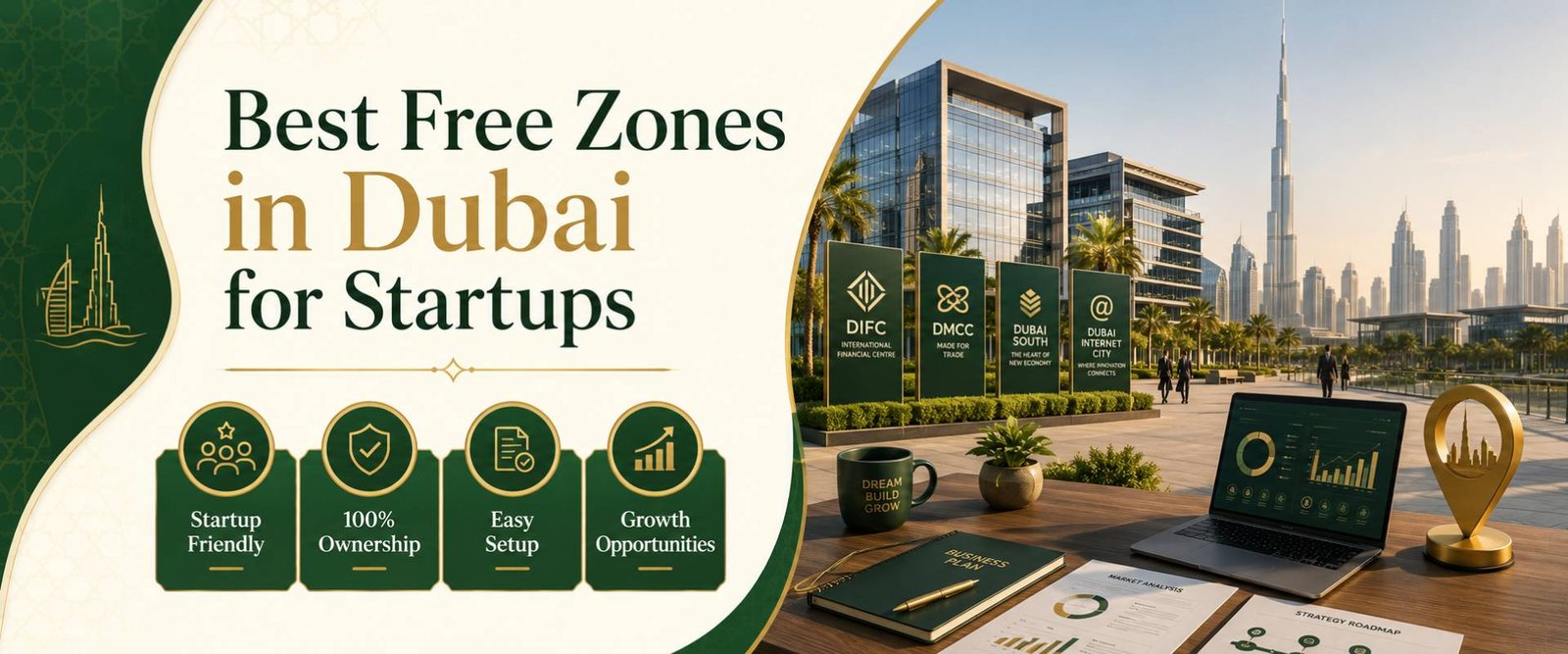
Most “best free zones in Dubai” lists rank zones purely on headline licence price, which is exactly the wrong lens for a startup. A founder choosing a free zone needs to weigh licence cost against visa quota, whether the zone actually has a startup ecosystem worth being inside, and how easily the setup converts into a working bank account and, increasingly, mainland access. This guide ranks Dubai’s free zones the way a founder should actually be comparing them, not just by the cheapest sticker price.
Quick Answer: Best Free Zones in Dubai for Startups at a Glance
- Best all-round value: IFZA, for service, consultancy and general trading startups wanting flexibility without DMCC-level cost
- Best tech ecosystem: DTEC (Dubai Silicon Oasis), for founders who want an actual startup community, labs and an in-house venture fund alongside the licence
- Best subsidised route: in5, for tech, media and design founders willing to go through a selective, equity-free incubation process
- Best for e-commerce and digital brands: Meydan Free Zone, for online-first businesses that do not need a specialised trading credential
- Best for trading, commodities and crypto: DMCC, for startups that need credibility with banks and international counterparties from day one
- Best budget options: SHAMS and RAKEZ, for founders prioritising the lowest entry cost over a Dubai postcode
What Makes a Free Zone Good for a Startup, Not Just Cheap
Before comparing individual zones, it helps to be clear on what actually matters for an early-stage company, since the criteria are different from those of an established firm:
- Visa quota relative to cost, since most startups need one to three visas, not the ten-plus a package is sometimes priced around
- Banking friendliness, since some zones have a stronger track record of their company formations passing bank KYC than others
- Startup-specific support, mentorship, incubation, in-house funding, and investor introductions, which only a handful of zones actually offer
- Activity fit, since a generalist licence is fine for a consultancy but a specific trading or crypto licence matters if that is your actual business
- Mainland access, now a genuine consideration since Dubai Executive Council Resolution No. 11 of 2025 opened a permit route for many free zone companies to sell directly into the mainland without a second entity
If you have not yet settled the broader mainland-versus-free-zone question, our guide to mainland vs free zone company setup in Dubai covers that decision before you get into picking a specific zone.
Key Benefits of a Free Zone Company in Dubai for Startups
Whichever zone you pick, every Dubai free zone company shares a core set of advantages that make this route attractive for a startup specifically, not just a cost-driven shortcut:
- 100% foreign ownership, with no requirement for a local Emirati partner or sponsor, regardless of nationality
- 0% corporate tax on qualifying income, for companies that meet Qualifying Free Zone Person (QFZP) conditions under the UAE’s corporate tax law, alongside 0% personal income tax for founders and staff
- Full repatriation of profits and capital, with no restriction on moving money back to a home country
- Fast formation, typically three to seven working days once documents are complete, far quicker than most jurisdictions globally
- No customs duty on goods within the zone, a meaningful saving for import-heavy or re-export businesses, particularly in designated zones
- Residency visa eligibility, with every standard package including at least one investor visa and most offering scalable options as the company grows
- Sector-specific ecosystems, since several zones cluster companies in the same industry, creating genuine networking and supplier proximity that a generic office park does not
These benefits apply broadly across zones, but the degree of practical support, mentorship, banking ease and community, varies significantly, which is exactly why the zone-by-zone comparison below matters more than the shared headline benefits alone.
IFZA: Best All-Round Value for Service and Trading Startups
International Free Zone Authority IFZA, based in Dubai Silicon Oasis, has become the default recommendation for cost-conscious founders running consultancies, trading businesses, marketing agencies and general services. Licences start from around AED 12,500 to 17,500 depending on activity count and visa allocation, and IFZA allows up to ten activities on a single licence with additional activities priced separately, useful for a startup whose model has not fully settled yet.
IFZA’s visa allocation scales from zero-visa packages up to six visas on standard packages, and its flexi-desk option keeps overhead low while a founder validates the business. The trade-off is that IFZA lacks the built-in startup ecosystem of a dedicated tech campus; it is a strong, low-cost licensing choice rather than a place with an in-house accelerator or investor network.
DTEC: Best for Tech Startups Wanting an Ecosystem
The Dubai Technology Entrepreneur Campus (DTEC), part of Dubai Silicon Oasis, is the most startup-purpose-built free zone in this list. Setup costs start at approximately AED 16,700 to 18,375 for a flexi-desk package with two visas, more than IFZA’s entry point, but the difference is what comes with it: DTEC has supported more than a thousand startups from roughly 90 countries, runs an in-house venture arm through Oraseya Capital, and hosts sector-specific labs and accelerator tracks, including hardware and AI-focused programmes.
For a founder who wants more than a licence, mentorship, investor proximity, and a genuine community of other early-stage companies working in the same building, DTEC is the strongest fit in Dubai specifically for technology ventures.
in5: Best Subsidised Route for Tech, Media and Design Founders
in5, launched by TECOM Group and based at Dubai Internet City, takes a different approach entirely: rather than a standard licence purchase, founders apply through a selective process and, if accepted, receive subsidised licensing alongside workspace, mentorship and investor access, without giving up equity. The trade-off is selectivity; in5 is built for early-stage and pre-Series A companies specifically in technology, media and design, and not every applicant is accepted.
This route suits a founder who has a genuinely promising early-stage technology or creative business and is willing to go through an application and pitch process in exchange for a lower-cost, higher-support setup than a standard free zone licence purchase.
Meydan Free Zone: Best for E-Commerce and Digital Startups
Meydan Free Zone has built a strong reputation among online-first businesses, consultancies and digital service providers, with licences typically ranging from AED 12,500 to 18,000 depending on visa allocation. Meydan’s setup process is fast, often completed within days, and its activity list covers e-commerce, marketing, IT services and general trading without requiring the specialised infrastructure that a zone like DMCC or a manufacturing-focused zone assumes.
For our detailed breakdown of e-commerce-specific licensing, including how Meydan compares to DET’s mainland e-commerce route and Dubai CommerCity’s warehousing-heavy model, see our guide to the e-commerce licence in Dubai.
DMCC: Best for Trading, Commodities and Crypto Startups
Dubai Multi Commodities Centre DMCC, based in Jumeirah Lakes Towers, is the more expensive option in this list, with licences typically running AED 20,000 to 34,000 or more depending on activity and office type, but it carries the strongest brand credibility of any zone covered here. DMCC’s scale, more than 25,000 active companies, gives it a track record with banks that newer or smaller zones cannot match, which matters disproportionately for a startup’s ability to open a functioning corporate account quickly.
DMCC is also the natural home for crypto and digital asset startups specifically, given its VARA-regulated crypto centre, and for any trading business dealing in physical commodities. For a founder whose business is pure digital services with no trading or crypto component, the premium over IFZA or Meydan is harder to justify.
SHAMS and RAKEZ: Best Budget Options
For founders prioritising absolute lowest cost over a Dubai address, Sharjah Media City (SHAMS) and Ras Al Khaimah Economic Zone (RAKEZ) both undercut every zone above, with SHAMS licences from around AED 5,750 and RAKEZ from around AED 6,000 to 9,900. RAKEZ has also introduced its own incubator and mentorship programme, narrowing the support gap with Dubai-based zones. The trade-off is straightforward: a non-Dubai address can matter for client perception and, in some cases, for banking, so this route suits founders for whom cost genuinely outweighs those considerations.
Comparison Table
| Free zone | Typical licence cost (AED) | Best for | Startup support |
|---|---|---|---|
| IFZA | 12,500 to 17,500 | Services, consultancy, general trading | Low, licence-focused |
| DTEC | 16,700 to 18,375 | Tech startups wanting ecosystem | High, in-house VC and labs |
| in5 | Subsidised, selective | Tech, media, design (pre-Series A) | Very high, equity-free |
| Meydan | 12,500 to 18,000 | E-commerce, digital services | Moderate |
| DMCC | 20,000 to 34,000+ | Trading, commodities, crypto | Moderate, strong banking credibility |
| SHAMS / RAKEZ | 5,750 to 9,900 | Budget-first setups | Growing, RAKEZ incubator new |
Free Zone Company Setup Process: Step by Step
The core registration process is broadly similar across every zone in this list, though timelines and document requirements vary slightly by authority:
- Choose your zone and legal structure, typically a Free Zone Establishment (single shareholder) or a Free Zone Company (two or more shareholders)
- Select and confirm your business activity against the zone’s approved activity list, since this determines your licence type and what you are legally permitted to do
- Reserve your trade name, checking it against the zone’s naming rules before submitting the full application
- Submit your documents, typically passport copies of all shareholders, a passport-sized photo, a completed application form, and for some zones a short business plan
- Receive initial approval and pay the licence fee, at which point the zone issues your trade licence
- Apply for your establishment card, the document that allows you to begin sponsoring residence visas
- Process residence visas for the investor and any staff, including medical testing and Emirates ID registration
- Open a corporate bank account, using your trade licence, establishment card and shareholder documents, a step that can take longer than the licence itself depending on the bank
Most zones in this list can complete steps one through five in three to seven working days once documents are ready; visa processing and banking typically add another two to six weeks on top of that. For a full first-year budget across licence, visas, office and hidden fees, see our guide to the cost of starting a business in Dubai.
How to Choose: Matching Zone to Activity and Stage
- If you need the lowest possible entry cost and your business is a pure consultancy or online service, start with IFZA
- If you are building a technology product and want mentorship and investor proximity built in, DTEC or an in5 application are worth the extra step over a generic licence
- If your business involves trading, commodities or crypto, or you expect to need strong bank credibility fast, DMCC’s premium is usually worth paying
- If you are running an e-commerce brand without warehousing needs, Meydan is typically the fastest and most cost-efficient route
- Whichever zone you choose, confirm early whether your business model will eventually need mainland access, since a Resolution 11 permit can now bridge that gap without forcing a second company
Foreign founders weighing these options for the first time should also check the ownership and residency basics covered in our guide on how foreign investors can open a business in Dubai, and confirm banking requirements early using our guide to opening a business bank account in Dubai, since account approval difficulty varies meaningfully by free zone.
Frequently Asked Questions
Which free zone is cheapest for a startup in Dubai?
SHAMS and RAKEZ offer the lowest entry costs, from roughly AED 5,750 and AED 6,000 respectively, though both sit outside Dubai’s immediate ecosystem.
Which free zone is best for a tech startup specifically?
DTEC in Dubai Silicon Oasis offers the strongest built-in startup ecosystem, including an in-house venture fund and sector-specific labs, while in5 offers a subsidised, equity-free route for selected early-stage technology, media and design companies.
Is DMCC worth the higher cost for a startup?
Generally only if your business involves trading, commodities or crypto, where DMCC’s scale and banking credibility offer a genuine advantage; for a pure service or digital business, IFZA or Meydan usually deliver similar outcomes for less.
Can a free zone startup in Dubai sell to mainland customers?
Yes, for most non-financial activities, through a branch licence or temporary permit under Dubai Executive Council Resolution No. 11 of 2025, without needing to form a separate mainland company.
Do startup-focused free zones like DTEC or in5 require giving up equity?
No. Both operate on an equity-free model, offering subsidised licensing, mentorship and investor access without taking an ownership stake in the company.
How many visas do most startup free zone packages include?
Entry-level packages typically start at zero to two visas, scaling up through office upgrades; most zones in this list can support a small founding team without a major cost jump.
What are the main benefits of setting up a free zone company in Dubai?
100% foreign ownership, 0% corporate tax on qualifying income, full profit repatriation, fast formation within days, and, in several zones, no customs duty on goods handled within the zone.
How long does it take to set up a free zone company in Dubai?
The licence itself is typically issued within three to seven working days once documents are complete, though visa processing and bank account opening usually add several more weeks on top.