vision2021.ae

Mainland vs Free Zone Company Setup in Dubai

Mainland vs Free Zone Company Setup in Dubai

Introduction

Dubai has established itself as one of the world’s leading destinations for entrepreneurship, investment, and international trade. Its strategic location, modern infrastructure, and business-friendly environment continue to attract startups, small and medium-sized enterprises (SMEs), multinational companies, and independent professionals from around the globe.

One of the first decisions entrepreneurs face when establishing a company in the UAE is choosing between a mainland company and a free zone company. Both options provide unique advantages and are designed to support different business objectives. Factors such as ownership regulations, market access, office requirements, licensing procedures, and operational flexibility can all influence the decision-making process.

Understanding the differences between these structures is essential for anyone considering business setup in Dubai. While there is no universally correct option, selecting the most suitable structure can help align a company’s operations with its target market, growth plans, and long-term goals.

This guide explores the key differences between the two models and provides a detailed comparison of mainland vs free zone company setup in Dubai to help entrepreneurs make informed decisions.

Understanding Business Setup Options in Dubai

Dubai offers a diverse business landscape that accommodates companies of different sizes, industries, and operational requirements. The two most common structures available to investors are mainland companies and free zone companies. Each operates under a different regulatory framework and serves different commercial needs.

What Is a Mainland Company?

A mainland company is a business entity licensed by the relevant mainland authorities within the UAE. This structure allows businesses to operate throughout the country and engage directly with the local market.

Mainland companies are commonly chosen by businesses that intend to provide products or services to customers across multiple emirates. They can establish physical offices, open branches in different locations, and participate in a broad range of commercial activities.

Another advantage of mainland entities is their ability to work directly with government departments and public-sector organizations, making them suitable for businesses seeking contracts or projects within the UAE.

Because of their broad operational scope, mainland companies are often preferred by retailers, service providers, construction firms, consulting agencies, and businesses that primarily serve local customers.

What Is a Free Zone Company?

A free zone company is established within a designated economic zone created to encourage investment, innovation, and international business activity. Dubai and the wider UAE host numerous free zones, each catering to specific industries and sectors.

Free zones are designed to provide a streamlined business environment with simplified registration procedures and supportive infrastructure. These zones often attract startups, technology firms, consultants, e-commerce businesses, trading companies, and international investors seeking a regional base.

Many free zones offer flexible office solutions and specialized business ecosystems that encourage collaboration among companies operating within similar industries. As a result, free zone structures have become a popular choice for entrepreneurs seeking efficient entry into the UAE market.

When evaluating a free zone or mainland company in Dubai, understanding the intended customer base and operational requirements often provides the clearest direction.

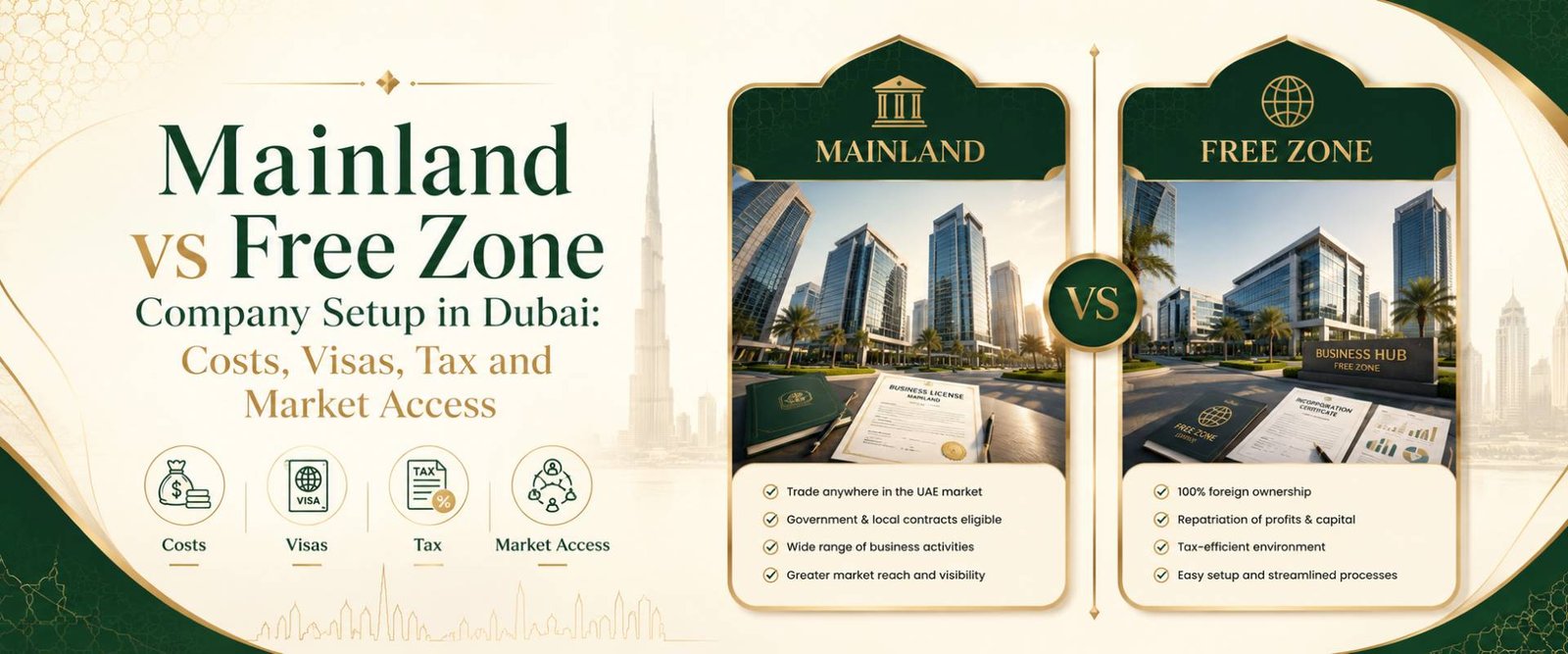
Mainland vs Free Zone Company Setup at a Glance

Choosing between these two structures requires evaluating several practical factors. The following comparison provides a high-level overview of how mainland and free zone companies differ.

Feature Mainland Company Free Zone Company
Business Scope UAE-wide operations Primarily within free zone and international markets
Foreign Ownership Available for many activities Generally available
Office Requirements Often required Flexible options in many zones
Government Contracts Eligible May have restrictions
Market Access Direct UAE market access May require additional arrangements
Setup Costs Vary by activity Vary by free zone
Business Activities Broad range Zone-specific limitations may apply

While both structures support entrepreneurship and investment, they serve different purposes. Mainland companies generally offer wider access to the local market and greater operational flexibility, whereas free zones are often attractive for international trade, specialized industries, and startup-focused environments. Understanding these differences is central to any discussion about mainland vs free zone company setup in Dubai.

Key Benefits of Mainland Company Setup

Mainland companies remain one of the most widely used business structures in the UAE due to their flexibility and extensive market access. For organizations planning long-term growth within the country, the mainland model offers several important advantages.

Access to the UAE Market

One of the strongest benefits of a mainland company is the ability to operate throughout the UAE without being restricted to a particular economic zone.

Businesses can serve customers across multiple emirates, establish offices in different locations, and engage directly with local consumers and organizations. This broad market access makes mainland companies particularly suitable for businesses whose success depends on reaching customers throughout the country.

For entrepreneurs comparing the two business structures, market access is often one of the most influential factors in the decision-making process.

Greater Business Flexibility

Mainland companies typically enjoy a wider range of permitted commercial activities compared to businesses operating within certain free zones.

This flexibility allows companies to adapt to changing market conditions, diversify services, and pursue new opportunities as they emerge. Businesses operating in consulting, professional services, retail, construction, logistics, and many other sectors often benefit from the broader scope available under mainland licensing frameworks.

As companies evolve, this flexibility can support sustainable growth without requiring significant structural changes.

Eligibility for Government Projects

Many public-sector projects and government-related opportunities require businesses to have a mainland presence.

Organizations involved in infrastructure, engineering, professional services, technology implementation, and other sectors may find that mainland licensing provides greater access to public procurement opportunities and long-term development projects.

For companies seeking to establish strong local partnerships and participate in national initiatives, this can be a significant advantage.

Easier Physical Expansion

Growth often requires a business to expand beyond its initial location. Mainland companies generally have greater flexibility when opening branches, establishing additional offices, and increasing their physical presence throughout the UAE.

This can be particularly valuable for businesses serving multiple regions or planning long-term expansion strategies. Whether opening new retail outlets, adding service centers, or expanding operational facilities, mainland structures often provide a practical foundation for growth.

Key Benefits of Free Zone Company Setup

Free zones have played a major role in attracting international investment and supporting entrepreneurship across the UAE. Their business-friendly environments and specialized ecosystems make them an appealing option for many organizations.

Simplified Registration Process

Many free zones are known for their efficient registration and licensing procedures.

Designed to encourage investment, these zones often provide structured application processes, dedicated support services, and streamlined administrative requirements. For entrepreneurs entering the UAE market for the first time, this can help simplify the early stages of company formation in Dubai.

The efficiency of many free zone authorities has contributed significantly to their popularity among startups and international investors.

International Business Opportunities

Free zones are often designed with global trade and international business activities in mind.

Many companies operating within free zones focus on regional expansion, international commerce, digital services, technology development, and cross-border operations. Their strategic locations and connectivity make them attractive hubs for organizations seeking access to markets across the Middle East, Asia, Africa, and Europe.

For businesses with an international customer base, a free zone structure may provide an environment that aligns closely with their operational needs.

Startup-Friendly Environment

Startups frequently choose free zones because of the support systems available within many of these economic areas.

Flexible workspace options, business support services, networking opportunities, and entrepreneurial communities can create an environment that encourages growth and innovation. This ecosystem can be particularly valuable for founders launching new ventures with limited resources.

When deciding between a free zone or mainland company, startup founders often evaluate which environment best supports their stage of growth and operational model.

Industry-Specific Ecosystems

One of the defining characteristics of many free zones is their focus on particular industries.

Some zones are designed around technology and innovation, while others specialize in healthcare, logistics, media, finance, manufacturing, education, or creative industries. By bringing together businesses within similar sectors, these ecosystems can encourage collaboration, knowledge sharing, and industry development.

This specialization has helped position free zones as important contributors to innovation, entrepreneurship, and economic diversification throughout the UAE.


Factors to Consider Before Choosing Mainland or Free Zone

Selecting the right business structure requires more than simply comparing setup procedures or initial costs. Entrepreneurs should evaluate their short-term requirements as well as their long-term business objectives before making a decision.

The most suitable structure often depends on the company’s target customers, operational model, growth strategy, and regulatory requirements. By carefully considering these factors, investors can choose a setup that supports both immediate needs and future expansion.

Target Market

The intended customer base is often one of the most important considerations when choosing a business structure.

Companies that primarily serve customers within the UAE may find mainland structures more aligned with their objectives because of their direct access to the local market. Businesses focused on international clients, global trade, or cross-border services may find that free zones offer an environment better suited to their operations.

Understanding where customers are located and how services will be delivered can significantly influence the decision between the two options.

Business Activity

Different business activities may have different licensing requirements and operational considerations.

Some industries benefit from the flexibility associated with mainland licensing, while others may find value in the specialized ecosystems available within free zones. Technology companies, media businesses, logistics firms, educational organizations, healthcare providers, and consulting agencies often evaluate available structures based on the specific requirements of their sector.

Before establishing a company, entrepreneurs should ensure that their chosen structure supports both current and planned business activities.

Budget and Operational Costs

Although setup expenses are important, they should be evaluated alongside long-term operational costs.

Business owners should consider licensing fees, office requirements, administrative expenses, renewal costs, staffing requirements, and future expansion needs. Focusing solely on initial registration expenses may not provide an accurate picture of overall business costs.

A structure that appears less expensive at the beginning may not always be the most practical choice as a company grows.

Growth and Expansion Plans

Long-term growth objectives should play a central role in the decision-making process.

Entrepreneurs planning to expand across multiple emirates, establish additional branches, or increase their physical presence within the UAE may have different requirements than businesses operating primarily online or internationally.

Evaluating future expansion plans before establishing a company can help reduce the need for significant structural changes later.

Regulatory Requirements

Every business must comply with licensing, operational, and regulatory requirements relevant to its industry.

Certain sectors may require approvals from specific authorities, while others may have unique compliance obligations. Understanding these requirements before establishing a company can help ensure smoother operations and reduce administrative challenges.

A well-informed approach to regulatory compliance supports long-term business stability and sustainable growth.

Which Businesses Are Best Suited for Mainland Setup?

Mainland structures are often chosen by organizations that require direct access to the UAE market and broad operational flexibility.

Businesses commonly suited for mainland setup include:

  • Retail businesses
  • Restaurants and hospitality companies
  • Construction firms
  • Professional service providers
  • Businesses targeting local consumers
  • Companies pursuing government contracts

These organizations frequently benefit from the ability to operate throughout the UAE, establish multiple locations, and engage directly with customers, suppliers, and public-sector entities. For businesses seeking strong integration within the domestic economy, mainland licensing often provides a practical foundation for growth.

Which Businesses Are Best Suited for Free Zone Setup?

Free zones are particularly attractive to businesses that prioritize international operations, specialized industry support, and flexible working arrangements.

Businesses commonly suited for free zone setup include:

  • Technology startups
  • Consultants
  • E-commerce businesses
  • Digital service providers
  • International trading companies
  • Remote-first businesses

Many of these organizations operate across borders, serve global clients, or rely on digital business models that do not require extensive physical operations within the UAE market. The specialized infrastructure available in many free zones can help support innovation, collaboration, and international growth.

Common Mistakes Entrepreneurs Make When Choosing a Business Structure

Selecting a company structure is an important strategic decision. However, entrepreneurs sometimes focus on short-term considerations while overlooking factors that may affect future growth.

Focusing Only on Initial Setup Costs

Choosing a structure solely because it appears less expensive can create challenges later.

Operational flexibility, market access, scalability, and long-term administrative requirements should be considered alongside registration expenses. Looking beyond the initial investment often leads to better long-term outcomes.

Ignoring Future Expansion Plans

Some entrepreneurs choose a structure based only on their current situation without considering future growth.

A company that plans to expand services, enter new markets, hire additional employees, or establish new locations may require greater flexibility in the future. Planning ahead can help avoid unnecessary restructuring.

Choosing the Wrong Business Activity

Business activities influence licensing requirements, approvals, and operational permissions.

Selecting an activity that does not accurately reflect the company’s intended operations can lead to delays, compliance issues, or limitations on future growth. Entrepreneurs should ensure that their chosen activity aligns closely with their business objectives.

Overlooking Regulatory Requirements

Regulatory compliance is an essential aspect of operating any business.

Failing to understand industry-specific regulations, licensing obligations, or approval requirements can result in complications during registration and ongoing operations. Conducting thorough research before establishing a company helps reduce potential challenges.

How Business Setup Decisions Support Economic Development

Business formation plays an important role in economic development by encouraging entrepreneurship, attracting investment, and supporting innovation. Every new enterprise contributes to economic activity, job creation, and knowledge exchange within the wider economy.

Entrepreneurship enables individuals and organizations to introduce new products, services, and technologies that improve productivity and create value. As businesses grow, they often invest in skills development, research, and innovation, helping strengthen knowledge-based industries and support long-term competitiveness.

Investment attraction is another important benefit of a diverse business environment. By providing multiple company structures and investment opportunities, the UAE has created an ecosystem that appeals to entrepreneurs, startups, and multinational corporations alike.

Economic diversification also benefits from a healthy business landscape. Growth across sectors such as technology, healthcare, education, logistics, manufacturing, finance, and professional services helps reduce dependence on individual industries while encouraging sustainable development.

Through innovation, investment, and entrepreneurship, business formation continues to support long-term economic resilience and national progress.

Frequently Asked Questions

Is a mainland company better than a free zone company?

Neither option is universally better. The right choice depends on business objectives, target customers, operational requirements, and long-term growth plans.

Can foreign investors own a mainland company?

Foreign ownership opportunities are available across many business activities in the UAE, subject to applicable regulations and licensing requirements.

Are free zone companies allowed to operate in the UAE market?

Free zone companies can engage in various business activities, although specific arrangements may be required depending on the nature of operations and target customers.

Which option is more cost-effective?

Costs vary depending on the chosen activity, licensing requirements, office needs, and operational structure. There is no single option that is always less expensive.

Can a company move from a free zone to the mainland?

Businesses may be able to restructure or establish new entities as their requirements evolve, subject to applicable regulations and procedures.

Which structure is better for startups?

Many startups choose free zones because of their flexible environments and support services, although the most suitable option depends on the startup’s goals and market focus.

Do mainland companies have access to more business activities?

Mainland companies are often associated with a broader range of business activities, making them attractive for organizations seeking operational flexibility.

How do I decide between a mainland and free zone company?

The decision should be based on factors such as target market, business activity, budget, expansion plans, and regulatory requirements. Evaluating these areas carefully can help identify the most suitable structure.

Conclusion

Choosing between a mainland company and a free zone company is one of the most important decisions entrepreneurs make when entering the UAE market. Both structures offer distinct advantages and are designed to support different business models and growth strategies.

Mainland companies provide broad access to the local market, operational flexibility, and opportunities to expand throughout the UAE. Free zones offer supportive business environments, industry-focused ecosystems, and attractive options for international companies and startups.

When evaluating mainland vs free zone company setup in Dubai, there is no one-size-fits-all answer. The most suitable option depends on business objectives, customer needs, industry requirements, and future expansion plans.

Entrepreneurs who need detailed guidance can also review a step-by-step resource on business registration requirements, licensing procedures, and company setup options available in Dubai.

As the UAE continues to strengthen innovation, entrepreneurship, and economic competitiveness, both mainland and free zone companies will remain important contributors to business growth, investment attraction, and long-term economic development.


Share this post

Discover More

Scroll to Top