Starting a lab-grown diamond business in Dubai involves more than obtaining a trade licence. The registration route, premises, investment requirements and regulatory obligations depend on whether a company intends to trade loose diamonds, manufacture or process stones, produce jewellery, or sell finished products to consumers.
Dubai already has an established diamond trading infrastructure, but laboratory-grown diamonds are developing into a distinct commercial category. For prospective business owners, the first decision is therefore not simply whether to establish a mainland or free zone company. It is identifying the precise activity the business will perform and confirming that the proposed licence permits it.
This guide examines the available business models, Dubai’s licensing environment, setup procedures, costs, anti-money laundering responsibilities, customs considerations and commercial risks.
In Summary: Starting a Lab-Grown Diamond Business in Dubai
A laboratory-grown diamond company may operate in wholesale trading, importing and exporting, manufacturing, cutting and polishing, jewellery production or retail, subject to the applicable permissions.
Mainland businesses generally investigate licensing through Dubai’s Department of Economy and Tourism (DET), while DMCC is a relevant free zone option for diamond-sector trading.
Manufacturing activities may require a different licence, approved premises and additional technical permissions.
Startup costs vary substantially by business model. A licence quotation alone does not represent the full cost of establishing the operation.
This article provides general business information and does not constitute legal, tax, financial or investment advice. Business owners should confirm current requirements with the responsible authorities.
Why Dubai Is Relevant to the Lab-Grown Diamond Industry
Dubai’s role in the diamond trade developed through international commodity trading, specialist commercial infrastructure and connections with suppliers and buyers across multiple markets. The Dubai Diamond Exchange, within the DMCC ecosystem, is part of that infrastructure.
Laboratory-grown diamonds have become significant enough to warrant more distinct treatment within the emirate’s diamond sector.
On 30 August 2026, DMCC announced the establishment of a dedicated Lab-Grown Diamond Vertical. The initiative recognises that laboratory-grown diamonds have commercial characteristics and industrial applications that differ from those of natural diamonds.
According to DMCC’s announcement, laboratory-grown diamond trade through the UAE reached 76.9 million carats in 2025, an increase of 91.5% compared with the preceding year. The reported value of that trade reached approximately USD 1.3 billion, representing growth of 7.5%.
These two growth rates reveal an important distinction. The quantity of diamonds traded increased considerably faster than their total reported value.
Consequently, expanding trade volumes should not be interpreted as evidence that individual diamonds are becoming more expensive or that new businesses can expect higher profit margins.
Dubai’s industry also extends beyond jewellery. DMCC has identified industrial and technological applications involving diamond materials, including advanced electronics and precision technologies.
For a prospective business owner, these developments demonstrate that the industry contains several commercial markets. However, a company trading jewellery-grade stones has different operational requirements from one producing industrial diamond material.
Types of Lab-Grown Diamond Businesses in Dubai
Before selecting a licence, entrepreneurs need to distinguish the business models available within the laboratory-grown diamond industry.
Although they involve the same underlying material, wholesale trading, manufacturing and jewellery retail may require different premises, documentation and regulatory arrangements.
Wholesale and B2B Diamond Trading
Wholesale trading involves purchasing laboratory-grown diamonds from producers, processors or suppliers and reselling them to other businesses.
Customers may include jewellery manufacturers, retailers, diamond dealers and international distributors.
A wholesale company may deal in rough stones, polished stones or both, depending on its authorised activities.
Its principal operational responsibilities typically concern supplier verification, inventory identification, transaction documentation, customs arrangements and customer due diligence.
A trading company does not necessarily need diamond-growing equipment or an industrial production facility. Nevertheless, it must verify that its specific licensed activity covers the products and commercial transactions it intends to undertake.
Diamond Manufacturing, Cutting and Polishing
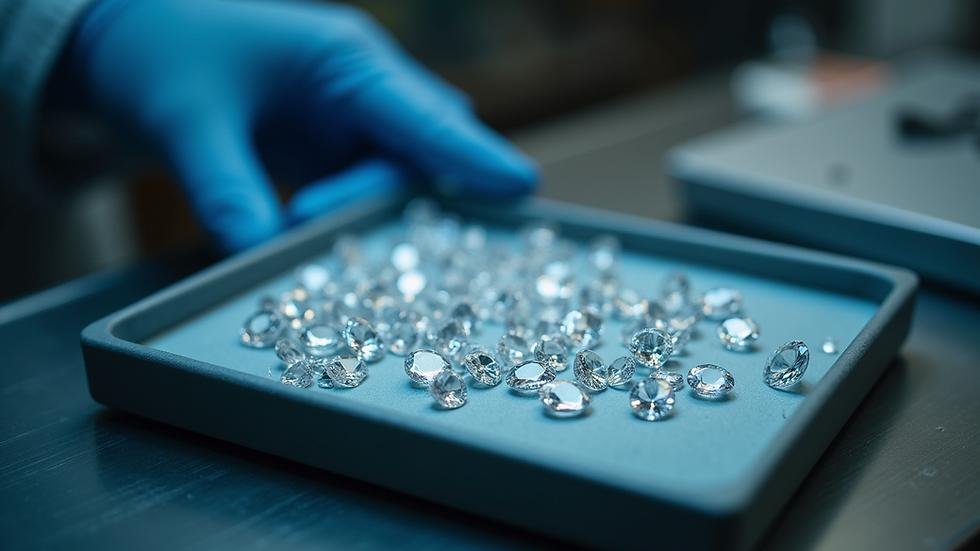
Manufacturing involves creating or physically processing diamonds.
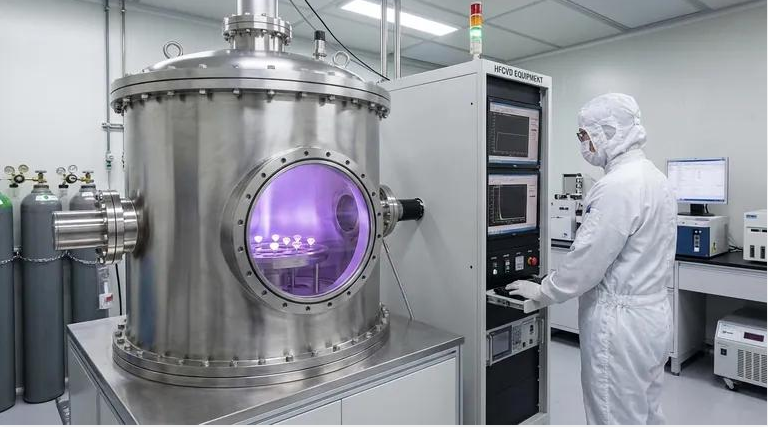
Two commonly discussed diamond growth technologies are chemical vapour deposition (CVD) and high-pressure high-temperature (HPHT).
CVD uses a controlled environment in which carbon-based material contributes to diamond crystal growth. HPHT produces conditions of high pressure and temperature associated with diamond formation.
Cutting and polishing are different activities from growing a diamond. A business importing rough laboratory-grown stones for polishing may therefore have a different operational profile from a company growing diamonds using specialised equipment.
Production facilities can involve machinery, power requirements, ventilation, workplace safety arrangements and specialised premises.
Entrepreneurs considering these activities should review the broader industrial licence requirements in Dubai as background, while confirming the exact diamond-specific activity and approvals independently.
An industrial licence should not be assumed to cover every form of laboratory-grown diamond production automatically.
Lab-Grown Diamond Jewellery Manufacturing and Retail
A jewellery business may purchase laboratory-grown diamonds and incorporate them into rings, necklaces, earrings or other finished products.
Different companies may operate as designers, manufacturers, wholesalers, showroom retailers or online sellers.
A retailer purchasing finished jewellery has different premises and production requirements from a workshop that manufactures jewellery.
Businesses planning consumer sales also need particular attention to product descriptions, diamond identification, sales records and customer disclosures.
Laboratory-grown diamonds should be clearly identified as such. A business should not market them in a way that causes customers to mistake them for natural diamonds.
Mainland vs Free Zone: Choosing the Right Business Setup Route
Dubai’s mainland and free zone incorporation routes serve different operational needs.
The appropriate jurisdiction depends on the proposed activity, customers, premises and distribution arrangements.
Business modelMainland considerationFree zone consideration
Wholesale diamond trading: Confirm the applicable DET commercial activity. Check available activities with DMCC or another relevant authority
Diamond manufacturing: Confirm industrial licensing and technical approvals. Verify whether the zone authorises the proposed production process and premises
Cutting and polishing: Establish whether separate processing permissions apply. Confirm the precise activity and workshop arrangements
Jewellery retail: Consider customer-facing premises and retail permissions. Confirm where consumer sales are permitted and whether additional arrangements are required
Jewellery manufacturing: Check manufacturing, workshop and selling activities separately. Verify whether production and trading may be combined under the proposed authorisations
DMCC is particularly relevant to diamond-sector businesses because of its established commodity ecosystem and the Dubai Diamond Exchange.
However, membership in a diamond trading ecosystem is not the same as regulatory approval for every diamond-related activity.
A company planning to grow diamonds, for example, should obtain written confirmation that its selected jurisdiction permits the intended production process and premises.
Mainland companies commonly investigate commercial or industrial activities administered through DET. The final permissions depend on the approved activity and any additional requirements.
Free zone businesses must also consider the arrangements for selling goods into the UAE mainland. Free zone registration does not automatically remove all mainland trading, distribution or customs requirements.
For a company whose main activity is buying and reselling stones, the broader general trading licence framework in Dubai offers useful context. Nevertheless, precious-stone-specific permissions must be checked separately rather than inferred from general trading rules.
How to Start a Lab-Grown Diamond Business in Dubai: Step-by-Step
The registration process should begin with the operational model, not a generic company formation package.
The following sequence provides a practical planning framework. The precise application procedure depends on the authority and activity.
- Define the intended business activity. Determine whether the company will trade loose diamonds, import rough stones, manufacture diamonds, cut and polish stones, produce jewellery or sell finished products.
- Select the jurisdiction. Compare mainland and relevant free zone options against actual customers, premises and supply-chain arrangements.
- Confirm the approved activity. Request the official activity description and code from DET, DMCC or the relevant licensing authority. Where multiple activities are intended, confirm whether they can be combined.
- Choose the company structure. Consider shareholder arrangements, ownership documentation and whether the business will be a new entity, subsidiary or branch.
- Apply for the trade name and preliminary approvals. Follow the selected authority’s current registration procedure. Additional approvals may be relevant to industrial operations.
- Identify suitable premises. A wholesale office, jewellery showroom and diamond production facility may have substantially different property requirements.
- Prepare the application documents. The authority may request ownership documents, identification, premises information and other activity-specific materials. Manufacturing applications may involve technical documentation.
- Complete licensing and registration. Obtain the necessary licence and confirm that its activity description accurately reflects the intended operations.
- Arrange banking and customs registration. Companies importing or exporting goods should establish the relevant customs arrangements. Banks will conduct their own reviews.
- Implement post-registration compliance. Review applicable AML obligations, accounting, taxation, beneficial ownership records, product documentation and ongoing renewal requirements.
The company should not begin activities requiring additional authorisation merely because its initial incorporation has been completed.
Licensing Requirements for Trading, Manufacturing and Jewellery Retail
A business licence identifies the activities a company is legally authorised to conduct.
A laboratory-grown diamond operation should therefore avoid relying on general terminology such as “diamond business licence” without establishing the specific approved activity.
Trading: A company buying and selling laboratory-grown diamonds should confirm that its licence permits the intended category of goods and trading activities. Importing, exporting and wholesale distribution must be considered alongside any other commercial activities.
Manufacturing: Producing laboratory-grown diamonds may involve industrial permissions and approved facilities. Diamond growth, cutting, polishing and jewellery manufacturing should not be assumed to fall under one interchangeable authorisation.
Retail: Jewellery shops and other customer-facing businesses should verify the relevant retail activity, premises conditions and permissions for any additional manufacturing or processing work.
Businesses combining activities need particular care. For example, a company importing polished diamonds and setting them into jewellery may require permissions different from those of a business simply reselling loose stones.
Where manufacturing forms part of the operation, premises suitability can be as important as the licence description. Machinery, electricity requirements, ventilation, fire safety and other technical considerations may affect approvals.
Before entering a lease or buying specialist equipment, the founder should obtain confirmation that the proposed activity and facility are acceptable to the issuing authority.
How Much Does It Cost to Start a Lab-Grown Diamond Business in Dubai?
The cost of establishing a laboratory-grown diamond company depends on the business model, jurisdiction, premises, machinery, inventory and ongoing compliance arrangements.
An initial licence fee should never be mistaken for a complete business startup budget.
DMCC publishes standard registration and licensing charges. Its published schedule, checked in October 2026, includes an application charge of AED 1,035, registration of AED 9,020, standard Articles of Association of AED 2,020, an annual licence fee of AED 20,285 and an annual establishment card charge of AED 1,825.
These are standard published charges under the relevant categories, not a guaranteed quotation for a laboratory-grown diamond company. Their applicability can depend on the selected activities, package and legal structure.
DMCC also publishes company setup packages with different included services and conditions. The authority should confirm which package or charges apply to a particular diamond business.
Comparing Costs by Business Model
| Expense | Wholesale trading | Manufacturing or processing | Jewellery retail |
|---|---|---|---|
| Business registration | Required | Required | Required |
| Licence | Trading activity | Appropriate industrial or processing activity | Retail or jewellery activity |
| Premises | Suitable office or commercial space | Approved industrial or workshop premises | Shop, showroom or suitable commercial premises |
| Equipment | Inventory and verification tools | Production, cutting or polishing equipment | Displays, security and point-of-sale equipment |
| Testing and grading | Depending on inventory and customers | Depending on production and quality controls | Depending on products sold |
| Security and insurance | Stock and transit considerations | Facility, machinery and stock considerations | Store, inventory and customer-facing operations |
| Working capital | Supplier purchases and trade credit | Inputs, machinery operation and labour | Finished jewellery inventory and operating costs |
Manufacturing expenses may be substantially higher than those of a trading operation because of production equipment, specialised premises and technical requirements.
Jewellery retail businesses must consider customer-facing premises, inventory security, displays, staff and other operating expenses.
A complete budget should also account for annual renewals, banking costs, accounting, compliance work, testing, product insurance and inventory financing.
The broader cost of starting a business in Dubai can help entrepreneurs identify common expenditure categories. Its general estimates should not be substituted for an activity-specific diamond business quotation.
For an accurate budget, founders should request a written breakdown covering the exact licence, premises, immigration arrangements, additional approvals and recurring costs.
Getting Professional Help with Company Formation
Some entrepreneurs engage corporate service providers to assist with company formation documents, application coordination and administrative requirements. Incorpyfy is a company formation services provider that may be considered when reviewing administrative support options. The relevant scope of assistance, fees and responsibilities should be established before any appointment. Licensing eligibility and activity-specific approval requirements must still be confirmed directly with the responsible Dubai authority.
Anti-Money Laundering and Financial Compliance Requirements
Diamond businesses may face specific anti-money laundering and counter-terrorist financing responsibilities because precious stones can be used in high-value international transactions.
The UAE regulates relevant Dealers in Precious Metals and Stones (DPMS) within its AML framework.
However, the exact obligations depend on the company’s activities and whether it falls within the legally defined regulated category.
It is important not to assume that every manufacturer, trader and retailer automatically has identical registration or reporting requirements.
Understanding the Main AML Responsibilities
Relevant businesses may need to address:
- Regulatory classification. Determine whether the company’s activity falls within the applicable DPMS definition and which authority supervises it.
- Registration and reporting. Establish whether the business is required to register on goAML and which reporting obligations apply.
- Customer due diligence. Identify customers and relevant beneficial owners in accordance with the applicable rules.
- Risk assessment. Evaluate risks associated with customers, jurisdictions, products, transaction patterns and payment methods.
- Transaction monitoring. Identify transactions requiring further review and maintain suitable documentation.
- Suspicious activity reporting. Follow the legally applicable procedures for identifying and reporting suspicious transactions.
- Record retention. Maintain records for the period required by the applicable regulations.
goAML is the UAE’s reporting platform associated with its Financial Intelligence Unit. The Ministry of Economy and Tourism provides guidance addressing relevant designated non-financial businesses and professions, including dealers in precious metals and stones.
Businesses should verify current reporting thresholds and categories against official regulations rather than relying on figures copied from general consultancy websites.
Product Identification, Disclosure and the Kimberley Process
Laboratory-grown diamonds are diamond materials produced in controlled environments rather than formed naturally underground.
Their chemical composition and relevant physical properties are substantially comparable to those of natural diamonds. Nevertheless, their origin is commercially important and must be represented accurately.
Retailers, manufacturers and wholesalers should maintain documentation that identifies the stones being purchased and sold.
Product descriptions should avoid terminology likely to mislead customers about whether a diamond is natural or laboratory-grown.
Useful business practices include maintaining clearly identified inventory, retaining testing documentation and ensuring that commercial invoices accurately describe the products.
Where particular language, storage or physical separation requirements are claimed to be mandatory, their legal basis and applicability must be confirmed. Commercial best practice should not be confused with a universal statutory requirement.
The Kimberley Process Certification Scheme has a different purpose. It concerns international trade in natural rough diamonds under its defined scope.
Laboratory-grown diamonds should not automatically be treated as requiring Kimberley Process certification merely because they are diamonds.
Businesses dealing in both natural rough diamonds and laboratory-grown stones should assess the regulatory requirements of each product category separately.
The UAE chaired the Kimberley Process in 2025, but that historical role does not itself change the certification requirements applicable to laboratory-grown stones.
Customs, Importing and Exporting Lab-Grown Diamonds
Businesses importing or exporting laboratory-grown diamonds need to consider customs registration, product classification, transaction documentation and the treatment of shipments entering or leaving the UAE.
Dubai Customs operates a business registration service through which eligible businesses can register to transact with Customs and receive a customs code.
Its published business registration service lists an AED 100 service fee plus AED 20 in Knowledge and Innovation fees, as checked in October 2026. Other clearance, declaration or shipment-related charges may apply separately.
Importers and exporters should retain accurate invoices, descriptions, origin information and shipment records.
The correct Harmonized System (HS) classification requires particular attention.
Natural and laboratory-grown diamonds should not automatically be assigned identical tariff classifications. The appropriate current UAE code should be confirmed for the precise product, its form and intended customs treatment.
Similarly, no universal customs duty should be assumed for all laboratory-grown diamond shipments.
Goods entering the UAE mainland, moving between customs regimes or being re-exported may be subject to different procedures.
A company should confirm the requirements for its actual trade route before arranging its first shipment.
Business Banking and International Payments
A corporate bank account is important for a business handling high-value international transactions.
Banks may review a diamond-related company’s commercial activities, shareholders, beneficial owners, anticipated transaction patterns and source of funds.
For a newly formed business, a complete and consistent explanation of its commercial operations can make the application easier to assess.
Potential documentation includes incorporation records, ownership information, supplier details, business plans, invoices and evidence supporting expected transactions.
The exact requirements vary by bank and business risk profile.
Businesses should also establish clear payment controls. Undocumented transactions, unexplained third-party payments and inconsistencies between invoices and goods can create financial and compliance difficulties.
A licence does not guarantee bank account approval.
Diamond Sourcing, Quality and Supplier Verification
A laboratory-grown diamond business depends on reliable supplier information and accurate product documentation.
A wholesaler should understand the origin, type, specifications and commercial terms associated with the stones it purchases.
Manufacturers may need additional information about source material, processing methods and quality controls.
Retailers should be able to explain the diamonds offered for sale and support product representations with suitable records.
A practical supplier review may include:
- Confirming the supplier’s business identity and operating credentials.
- Examining invoices and transaction histories.
- Obtaining relevant grading or identification documentation.
- Checking consistency between supplied specifications and delivered stones.
- Establishing procedures for returns, disputes and product discrepancies.
- Maintaining records connecting inventory to purchase and sales transactions.
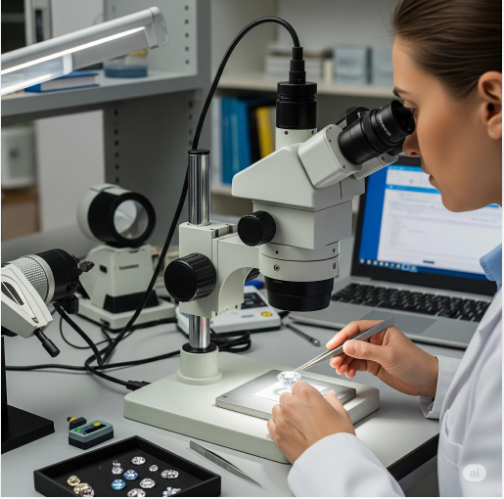
Independent gemological reports can help establish characteristics of a stone, but a grading report should not be interpreted as a guarantee of resale value or future investment performance.
Commercial Risks of Operating a Lab-Grown Diamond Business
Laboratory-grown diamonds are part of a competitive international market.
Businesses should consider how production capacity, wholesale pricing, inventory cycles and changes in customer preferences may affect their operations.
Price pressure is particularly relevant to businesses holding substantial unsold inventory.
Manufacturers face additional exposure to equipment costs, production efficiency, maintenance and facility expenses.
Retailers face different risks involving consumer expectations, jewellery trends, stock turnover and product presentation.
International traders must also consider counterparty risks, payment delays, shipment problems and changes in customs or regulatory conditions.
A rising number of carats traded across the UAE does not establish that all businesses in the market are enjoying higher margins.
Founders should therefore assess their operating model using realistic expenses, documented supplier arrangements and appropriate working capital rather than assumptions about future diamond prices.
Common Mistakes When Establishing a Diamond Business
Several mistakes can create avoidable regulatory or operational difficulties.
- Selecting an unsuitable licence. The company may discover that its licence covers trading but not the intended production or processing activity. The proposed activities should be confirmed before registration.
- Choosing premises before verifying permissions. A workshop or manufacturing facility may need technical approvals unavailable at an ordinary commercial office. Property commitments should follow licensing and facility checks.
- Underestimating costs. Licence fees represent only part of the budget. Premises, machinery, inventory, renewals and compliance should be assessed separately.
- Assuming AML obligations are irrelevant. Businesses dealing in precious stones should establish whether they fall within the relevant regulated category and implement applicable controls.
- Using incomplete product descriptions. Inventory and sales records should clearly distinguish laboratory-grown diamonds from natural diamonds.
- Overlooking customs classification. Product descriptions and tariff classifications should be reviewed before shipments.
- Relying on unsupported supplier claims. Product identification and transaction documentation should be checked rather than accepted without review.
- Assuming banking approval is automatic. Banks conduct their own commercial and compliance assessments, regardless of the company’s licensing status.
Three Illustrative Business Setup Scenarios
The following examples are hypothetical. They illustrate how different operating models lead to different regulatory and commercial considerations.
Scenario 1: Wholesale Laboratory-Grown Diamond Trader
A Dubai-based company intends to purchase polished laboratory-grown diamonds from overseas suppliers and distribute them to jewellery manufacturers.
Its initial concerns include trading activity approval, supplier verification, customs arrangements, business banking and any applicable DPMS compliance requirements.
An approved commercial office may be suitable, subject to the selected authority’s conditions.
The company would not necessarily require the industrial equipment associated with diamond production.
Scenario 2: Jewellery Retailer Adding a Lab-Grown Collection
An established jewellery retailer intends to add laboratory-grown diamond rings and necklaces to its product range.
The retailer needs to check that its existing licensed activities cover the intended products and any additional manufacturing work.
Accurate product descriptions, stock identification, grading information and customer disclosures become central operational considerations.
A business manufacturing jewellery in-house should assess workshop permissions separately from retail authorisation.
Scenario 3: Diamond Processing and Polishing Operation
A company proposes to import rough laboratory-grown stones, cut and polish them in Dubai, and export the finished products.
This operation raises more complex premises and technical questions than a standard trading company.
The owners would need to investigate permitted processing activities, workshop suitability, machinery requirements, safety arrangements and shipment documentation.
The proposed industrial activity should be confirmed before the business commits to machinery purchases or facility leases.
Before You Apply: Business Setup Checklist
A prospective founder should be able to answer the following questions before committing significant expenditure.
- Has the intended business activity been described precisely?
- Has the relevant authority confirmed the licence category?
- Are manufacturing, cutting or polishing permissions required?
- Is the proposed location suitable for the business activity?
- Has the company obtained a complete written breakdown of setup and renewal costs?
- Have the relevant AML and goAML obligations been checked?
- Are customs registration and shipment documentation requirements understood?
- Have the correct product classification and identification procedures been established?
- Are suppliers and customers subject to appropriate verification?
- Are banking arrangements and working capital sufficient for the intended scale of operations?
- Are product descriptions and sales documentation accurate?
- Have unresolved approvals been confirmed before contracts or equipment orders are finalised?
Frequently Asked Questions About Lab-Grown Diamond Businesses in Dubai
1. Can a foreign entrepreneur start a lab-grown diamond business in Dubai?
Foreign entrepreneurs can investigate mainland and free zone company formation options. The applicable ownership, documentation and licensing arrangements depend on the selected legal structure and business activity.
2. Is DMCC suitable for lab-grown diamond trading?
DMCC has an established diamond trading ecosystem and introduced a dedicated Lab-Grown Diamond Vertical in August 2026. A prospective company must still confirm the exact permitted activity, premises and applicable licence conditions.
3. Is a trading licence enough to manufacture laboratory-grown diamonds?
Not necessarily. Trading and manufacturing are different commercial activities. Diamond growth, cutting, polishing or jewellery production may require separate or additional permissions.
4. How much does it cost to start a lab-grown diamond business in Dubai?
Costs depend on the business model and jurisdiction. DMCC publishes standard registration and licensing charges, but a full diamond business budget must also consider premises, equipment, inventory, compliance and renewals. An activity-specific written quotation is necessary for a reliable total.
5. Do diamond businesses need to register on goAML?
Businesses falling within the applicable regulated categories may have goAML registration and reporting responsibilities. The precise obligations should be assessed under the current UAE AML framework and the company’s actual activities.
6. Do lab-grown diamonds require Kimberley Process certificates?
The Kimberley Process Certification Scheme concerns natural rough diamonds within its defined scope. Its certification requirements should not automatically be applied to laboratory-grown stones.
7. Can a Dubai free zone company sell lab-grown diamonds to mainland customers?
The answer depends on the company’s activities and applicable mainland trading arrangements. Free zone incorporation does not automatically eliminate customs, distribution or other mainland requirements.
8. What should a jewellery retailer check before selling lab-grown diamonds?
The retailer should confirm its permitted activities, accurate product terminology, suitable identification documentation, inventory procedures and applicable customer disclosure requirements.
Planning a Diamond Business Around the Right Licence and Operating Model
Establishing a lab-grown diamond business in Dubai begins with matching the intended activity to a suitable legal and operational structure.
Wholesale traders, jewellery retailers and manufacturers participate in related markets, but their permissions, premises and costs can differ considerably.
DMCC’s dedicated laboratory-grown diamond initiative reinforces Dubai’s position within this developing industry. Nevertheless, it does not replace the need for activity-specific licensing, financial compliance, accurate product identification and customs verification.
The most practical approach is to establish the exact operating model, obtain written confirmation of relevant permissions, prepare a realistic budget and resolve material regulatory questions before committing to premises, machinery or substantial inventory.